Modern travelers increasingly prioritize fitness while on the road. Unfortunately, many hotel gyms still harbor outdated, mismatched machines. This frustrates guests. It also translates directly into scathing online reviews and lost bookings. In this comprehensive guide, you will discover how to select the optimal hotel gym equipment to elevate your property appeal. We will help you upgrade your wellness space safely and efficiently. Every square foot must work to your advantage.
Key Takeaways
Space and Demographics Dictate Choices: Understanding your floor plan and whether your guests are business travelers or vacationers is the first step in equipment selection.
Commercial Grade is Non-Negotiable: For safety, durability, and liability reasons, hotels must invest in heavy-duty commercial machines over residential builds.
Cardio is King but Strength is Essential: A balanced facility needs top-tier cardiovascular units alongside versatile resistance training stations.
Smart Sourcing Saves Capital: Partnering with a reputable manufacturer ensures robust warranties, bulk pricing, and reliable maintenance support.
Current Trends Reshaping Hospitality Fitness
The hospitality sector is witnessing a massive shift in wellness tourism. According to recent industry analyses, health-focused travel is expanding at an unprecedented rate. Guests no longer accept a dusty, windowless room with a single broken treadmill. Post-pandemic travelers demand hyper-personalized, holistic wellness amenities. They expect the same high-performance machines they use at their local boutique studios.
Furthermore, there is a distinct surge in the integration of smart technology. Modern exercisers want seamless Bluetooth connectivity to sync their wearables and track real-time metrics. Sustainability is another undeniable priority. Eco-friendly, self-powered machines that generate their own electricity are highly appealing to eco-conscious travelers. Staying ahead of these trends transforms a basic workout room into a prominent, revenue-driving feature.
Why Upgrading Facility Gear is a High-ROI Investment
A premium fitness center allows operators to justify higher Average Daily Rates. It positions the property favorably within the lucrative wellness market. For many prospective guests, the caliber of the workout facility serves as a primary deciding factor when choosing between competing properties. Consequently, upgrading your facility with professional-grade gear directly impacts guest retention.
Neglecting this space severely damages brand image. Browse platforms like TripAdvisor or Google. A common grievance found in negative reviews is the presence of inadequate fitness machines. By providing high-efficiency equipment, operators demonstrate a clear commitment to guest health goals. This fosters brand loyalty and encourages repeat visits.
Pre-Purchase Planning: Space, Budget, and Facility Requirements
Before issuing purchase orders, procurement managers must conduct a rigorous assessment of available space. Proper foresight prevents overcrowded rooms and ensures a safe environment.
Imagine a guest attempting to squeeze between a bulky treadmill and a dumbbell rack. They risk a tripped ankle before their morning meeting. To prevent such hazards, spatial efficiency must align with safety protocols. Industry standards dictate leaving a minimum of 36 inches of clearance space around each machine. This buffer is vital for accessibility.
Beyond basic machine placement, structural facility requirements require an engineer perspective. Installing heavy-duty rubberized flooring—ideally 15mm to 20mm thick—is mandatory. This protects both the expensive equipment and the building structural integrity from dropped weights. Additionally, operators must verify electrical capacities. High-powered treadmills require dedicated 20-amp circuits to prevent breaker trips during peak morning hours.
Must-Have Commercial Cardio Equipment for Hotels
Cardiovascular machines remain the cornerstone of any hospitality fitness center. These units experience continuous, daily friction. Therefore, investing in top-tier commercial cardio equipment is absolutely essential for minimizing maintenance costs.
Treadmills: The Undisputed Staple
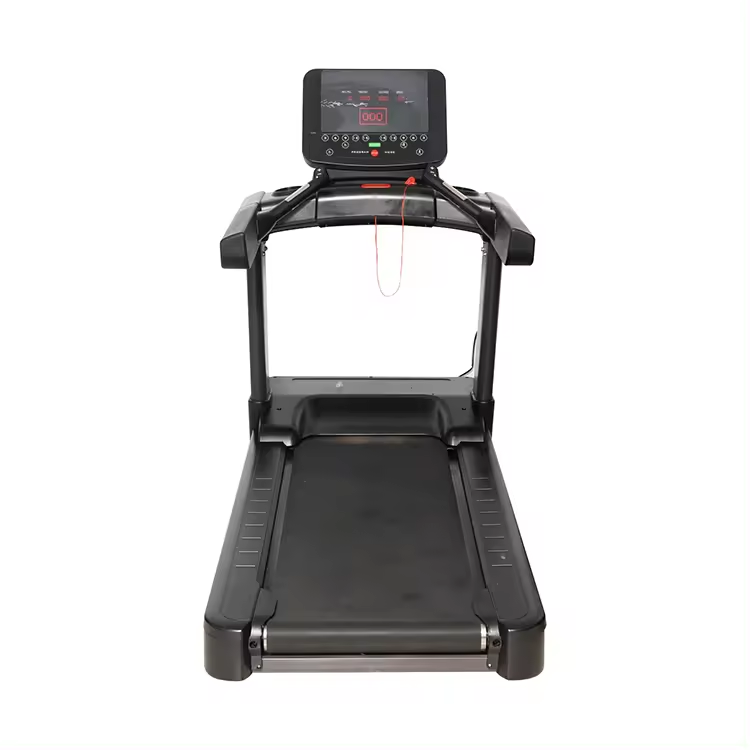
Treadmills consistently rank as the highest-traffic units. For a commercial setting, operators must prioritize heavy-duty components. Look for models engineered with a 3.0 HP continuous-duty AC motor. These powerhouses withstand hours of operation without overheating. A prime example includes units featuring a Smart Entertainment Display or a crisp LED console. Intuitive interfaces allow weary travelers to begin their workouts instantly without navigating convoluted menus. Advanced shock absorption systems are equally critical to reduce joint impact and provide a premium running experience.
Ellipticals and Cross-Trainers
Ellipticals are highly sought after by guests seeking a low-impact, full-body workout. Commercial cross-trainers should feature a natural, biomechanically correct stride length. Where possible, opt for self-powered capabilities. This dramatically reduces the need for complex electrical wiring across your facility floor.
Stationary Bikes and Commercial Rowing Machines
A well-rounded cardio section must include both upright and recumbent bikes. Recumbent models offer essential lower-back support for older guests. Specifically, there is a surging trend toward commercial rowing machines. Rowers provide an exceptional full-body cardiovascular workout while maintaining a minimal footprint. This makes them highly efficient for space-constrained environments.
The Best Commercial Strength Equipment to Maximize Space
Cardio draws the morning crowd. However, a premium facility remains incomplete without robust strength options. Space is often at a premium. Therefore, selecting the right commercial strength equipment requires a sharp focus on versatility.
Multi-Station Gyms and Dual-Function Machines
For boutique hotels operating with limited square footage, dual-function machines serve as the ideal solution. These ingenious units combine two distinct biomechanical movements into a single frame. Think of a leg extension and seated leg curl combo. By integrating these units, hotels offer a comprehensive resistance training experience without sacrificing precious floor space.
Smith Machines and Functional Trainers
A cable-based functional trainer is arguably the most versatile apparatus a hotel can acquire. Featuring dual adjustable weight stacks and multiple attachments, it supports hundreds of different exercises. Similarly, a Smith machine provides a safe, guided barbell system. Guests can perform heavy compound movements without the need for a human spotter. This is a critical safety feature for unsupervised environments.
Free Weights and Benches
No fitness center is truly complete without a dedicated free weight zone. A commercial-grade rack featuring urethane dumbbells ranging from 5 to 50 lbs is highly sufficient for standard setups. Complement these weights with at least two heavy-duty adjustable benches. Ensure they transition smoothly between flat, incline, and decline positions. These foundational items require minimal maintenance.
Commercial vs. Residential Gym Equipment: The Engineering Difference
A common pitfall for budget-conscious operators is attempting to furnish centers with residential-grade machines. This shortcut inevitably leads to higher long-term replacement costs. Deploying home equipment in a commercial setting voids the manufacturer warranty immediately. It also opens the hotel up to severe legal liabilities if a guest is injured due to sudden mechanical failure.
Evaluation Criteria
Residential Build Specifications
Commercial Engineering Standards
Usage Capacity
Built for intermittent use by a single household.
Engineered to withstand 10 plus hours of continuous daily friction.
Frame and Build Quality
Lighter gauge steel, smaller DC motors, basic foam padding.
Heavy-duty 11-gauge steel frames, robust 3.0 HP AC motors, sweat-resistant upholstery.
Warranty and Liability
Warranty voided instantly in hospitality settings. High liability risk.
Backed by comprehensive commercial warranties. Rigorously tested for liability protection.
Commercial machines feature thicker frame construction and superior biomechanics. The internal components, such as sealed bearings and poly-V belts, are designed specifically to endure the rigorous environment of a bustling hotel gym.
Maintenance, Cleaning, and Facility Upkeep
Purchasing top-tier gear is only the first step. Maintaining that capital investment through rigorous upkeep ensures long-term profitability and unwavering guest safety.
Hygiene is paramount. Hotels must establish strict daily cleaning protocols to prevent the corrosive buildup of sweat. Sweat rapidly degrades metal frames and ruins upholstery. Providing easily accessible sanitization stations encourages guests to wipe down machines after use. This collaborative effort extends the equipment lifespan significantly.
A proactive approach to maintenance prevents minor mechanical hiccups from escalating into systemic repairs. Facility managers should implement a routine schedule. This includes lubricating treadmill belts, inspecting steel cables for dangerous fraying, and tightening structural bolts on heavy-use strength machines.
How to Choose the Right Gym Equipment Supplier
Selecting the right supplier is just as critical as selecting the machines themselves. Procurement directors must look beyond the initial purchase price. Evaluate the supplier as a long-term operational partner.
One highly effective strategy is single-source purchasing. Partnering with a supplier that offers a comprehensive catalog simplifies logistics and ensures aesthetic consistency. When a facility sources cardio and strength stations from the same manufacturer, the gym benefits from a unified design language. Matching frame structures and console interfaces signal premium quality to guests.
Objective decision-making requires evaluating the Total Cost of Ownership. Request data that helps calculate this metric. High-quality commercial machines command a higher initial price, but they dramatically reduce repair frequency and downtime costs over a ten-year lifecycle. Prioritize suppliers who guarantee fast shipping for critical replacement components and offer accessible technical support.
Elevate Your Guest Experience Today
A well-equipped hotel gym is an incredibly powerful marketing tool. It drives guest satisfaction and increases overall booking rates. To maximize your investment, always prioritize commercial-grade durability. Choose a smart, spatially efficient mix of cardiovascular and resistance machines.
Ready to transform your property workout space? Evaluate your specific floor plan and guest demographics. Then, partner with a manufacturer that understands commercial engineering demands. Browse the extensive professional catalog at MND Fitness to find the exact machines that align with your vision. Upgrade your fitness center today and instantly boost your property value to the modern wellness traveler.
FAQ
How much space is required for a standard hotel gym?
Industry standards suggest a minimum of 300 to 500 square feet for a basic setup. However, square footage alone does not dictate capacity. Proper spatial planning and safety clearances are critical. Guests must be able to navigate the facility safely. Cramming equipment into a small room increases liability. For a standard 400-square-foot room, a property can comfortably fit two treadmills, one elliptical, one dual-function strength machine, and a small dumbbell rack.
What is the most popular piece of gym equipment in hotels?
Empirical data consistently shows that treadmills are the most utilized machines. They account for approximately 40 to 50 percent of total equipment usage in hospitality environments. Walking and running are fundamental movements requiring no specialized training. Following treadmills, ellipticals rank as the second most popular cardio option. On the strength training side, functional cable trainers and adjustable dumbbells are highly sought-after due to their incredible versatility.
What is the average budget to equip a hotel gym?
The budget varies drastically based on the property size and target demographic. A basic 400-square-foot facility featuring a few commercial cardio units and a compact strength station typically ranges from 15,000 to 25,000 dollars. Luxury resorts or large-scale business hotels outfitting 1,000-square-foot holistic wellness centers can expect to invest upwards of 50,000 to 100,000 dollars. Factoring in heavy-duty flooring and mirrors will also impact the final procurement budget.
How can I make my hotel gym more appealing to guests?
Move beyond basic iron and steel. Incorporate dedicated recovery zones equipped with high-density yoga mats and foam rollers. Ensure your cardio machines feature smart displays with Bluetooth connectivity. Improve the ambiance by upgrading lighting, installing floor-to-ceiling mirrors to create the illusion of space, and providing complimentary amenities like chilled towels and infused water. Cleanliness and fresh air ventilation are also immediate indicators of a premium space.
How often should hotel gym equipment be replaced?
The replacement cycle depends on usage volume and maintenance practices. With a strict preventative maintenance schedule, high-quality cardiovascular machines typically last 5 to 7 years. Internal electronic components often degrade after this period. Selectorized strength machines boast heavy-duty steel frames that can last 10 to 12 years. Wear-and-tear items like cables and upholstery will need replacing every 1 to 3 years. Free weights generally offer a 7 to 10-year lifespan before structural fatigue sets in.
Do I need a dedicated staff member for the hotel gym?
For the vast majority of standard hotels, a dedicated staff member is not necessary. Modern commercial fitness equipment is engineered for safe, unsupervised use. By implementing smart facility design and rigorous operational protocols, hotels can offer 24-hour gym access. Management must focus on intuitive equipment selection, clear facility signage, and strict security measures like keycard access control. The housekeeping and engineering departments must include the gym in their daily rounds to ensure ongoing cleanliness.