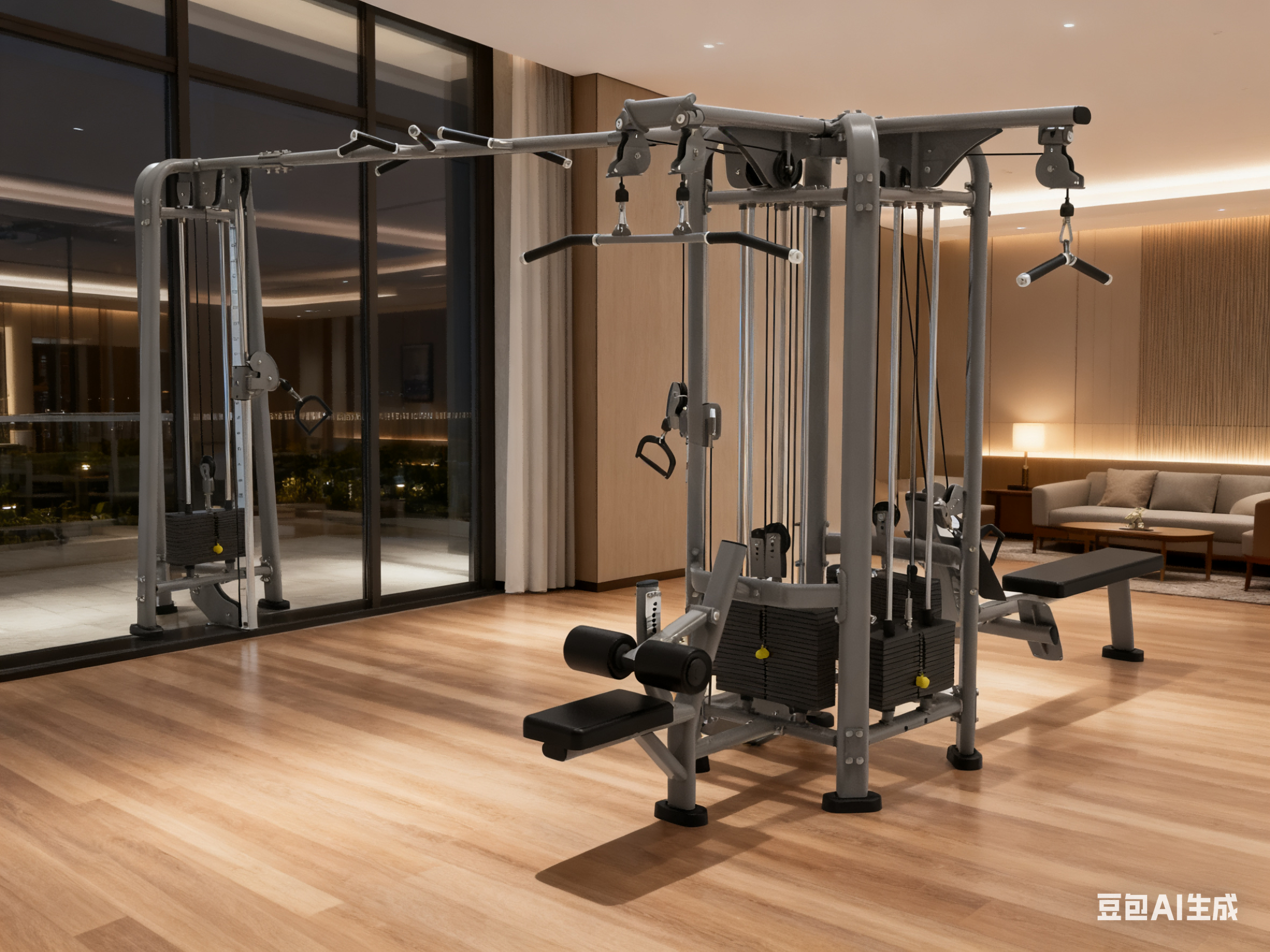
Acquiring a commercial fitness system transcends a simple equipment purchase. It represents a strategic facility investment. You deploy it to maximize training capacity per square foot. Facility managers in hotels, corporate wellness centers, and specialized studios face high stakes every day. Equipment downtime, poor biomechanics, and safety liabilities directly impact client satisfaction. These issues also strain operational workflows and staff resources.
Bypassing exaggerated marketing claims requires a robust evaluation framework. You must assess equipment based on footprint efficiency, structural durability, and long-term user safety. This guide provides the exact criteria needed to make an informed decision. We will show you how to evaluate space requirements, configure the right modules, and identify true commercial-grade manufacturing. You will learn to navigate layout logistics and secure reliable warranties to protect your facility.
Key Takeaways
Space-to-User Ratio: Multi station gyms consolidate footprints, allowing 4 to 8 simultaneous users in a fraction of the space required for single-station machines.
Configuration is Key: Integrating a functional trainer module maximizes versatility for both isolated and dynamic movements.
Commercial Certification: True commercial viability requires heavy-gauge steel, high-tensile cables, and fully shrouded weight stacks to mitigate liability.
1. Defining Your Facility’s Core Problem and Success Criteria
Every commercial fitness space serves a distinct demographic. You cannot blindly purchase a Multi Station Gym without first analyzing who will use it. Identifying your core user base dictates the specific features your equipment must possess.
Aligning Equipment with Facility Type
Corporate wellness centers and hospitality environments primarily serve unsupervised users. These guests often lack formal fitness training. Therefore, facility managers must prioritize intuitive design. Machines should feature minimal adjustments, clear instructional placards, and full safety shrouds. You want users to sit down, select a weight, and perform the movement safely.
Conversely, private training studios and commercial membership gyms cater to experienced lifters. These environments demand different specifications. You must prioritize heavy weight stacks, micro-adjustment capabilities, and advanced biomechanics. Experienced users expect precise resistance curves and modular setups supporting complex training regimens.
Calculating Space Efficiency (Floor Plan Realities)
Space efficiency goes far beyond measuring the static dimensions of a machine. You must account for the dynamic operating footprint. When users perform cable pull movements, their bodies extend outward. This requires significant operational clearance.
Follow these steps to define your facility's success criteria:
Measure the absolute boundaries: Document your total available floor space, noting immovable structures like pillars and emergency exits.
Calculate the dynamic envelope: Add at least 36 to 48 inches of clearance around cable columns to accommodate users performing lunges or extended pulls.
Define simultaneous user capacity: Determine how many individuals need to train simultaneously during your facility's peak hours.
Map traffic flow: Ensure safe walkways remain clear when all stations are in active use.
2. Solution Categories: Choosing the Right Configuration
Configuring your multi-station setup correctly determines its daily utility. You have several layout options, ranging from basic pods to expansive jungle gyms. Selecting the right combination ensures you meet diverse training needs.
Standard Multi-Stack Layouts
Standard configurations typically utilize a 4-stack or 5-stack central tower. Manufacturers usually equip these towers combining a lat pulldown, a seated low row, a tricep press down, and an adjustable hi/lo pulley. This combination covers the fundamental isolated strength movements. It allows multiple users to perform heavy, fixed-path exercises simultaneously. Standard layouts fit perfectly into corner spaces or central floor plans.
Integrating a Functional Trainer
Modern training trends emphasize multi-planar movements over rigid, isolated exercises. Replacing a standard single cable column with a dedicated functional trainer module offers a distinct advantage. A dual-pulley system allows users to perform full-body, dynamic exercises like cable crossovers, woodchoppers, and sports-specific rotational movements.
This integration caters heavily to rehabilitation needs and athletic conditioning. It provides independent arms or dual wide pulleys. Users gain infinite range of motion, which traditional single-station machines simply cannot replicate.
Modularity and Scalability
Smart facility managers purchase equipment anticipating future growth. You should evaluate systems offering modularity. Many premium lines allow facilities to start with a modest 4-station pod. As membership or daily usage scales, you can bolt on additional modules. You might eventually expand the unit into a massive 8-station jungle gym featuring cable crossovers and multiple pull-up stations. This scalability prevents you from needing to replace the entire unit as demand increases.
Configuration Comparison Guide
Feature Category
Standard 4-Stack Tower
Hybrid System (w/ Dual Pulleys)
Primary Focus
Heavy, isolated strength training
Dynamic, multi-planar movements
User Experience
Intuitive, fixed movement paths
Highly versatile, requires some skill
Space Requirement
Compact centralized footprint
Requires wider dynamic clearance
Ideal Environment
Corporate gyms, beginner spaces
Private studios, athletic facilities
3. Commercial-Grade Evaluation Dimensions
Marketing brochures often blur the line between "light-commercial" and true commercial-grade equipment. Placing a light-commercial unit in a high-traffic facility invites structural failure and legal liability. You must evaluate equipment using strict engineering dimensions.
Frame and Structural Integrity
The foundation of any multi-station unit lies in its frame. You must specify a requirement for 11-gauge steel tubing (approximately 0.12 inches thick) or better. Manufacturers should utilize continuous commercial-grade robotic welding, not spot welds. When you inspect the frame, look for powder-coated finishes resisting rust and sweat corrosion. Warn your procurement team against budget machines marketed for "heavy use" if they rely on thinner 14-gauge steel.
Cable, Pulley, and Hardware Specs
Cables and pulleys endure the most friction and abuse. Subpar hardware leads to snapped lines and out-of-order signs.
Cable Strength: Look for military-spec or aircraft-grade steel cables (e.g., MIL-DTL-83420 standard). They should boast a tensile strength exceeding 2,000 pounds.
Cable Coatings: Ensure the cables feature extruded nylon or polyurethane jackets to prevent metal-on-metal wear.
Pulley Materials: Compare aluminum pulleys against nylon or fiberglass-reinforced pulleys. Aluminum lasts significantly longer and provides a smoother glide under heavy loads. However, high-density fiberglass pulleys offer excellent longevity if built with sealed cartridge bearings.
Biomechanics and Ergonomics
A machine's biomechanics determine how the resistance feels throughout the movement. You must assess the weight stack ratio. A 1:1 ratio means moving 100 pounds on the stack requires 100 pounds of force. This suits lat pulldowns and heavy rows. A 2:1 ratio (often found on dual-pulley systems) means moving 100 pounds requires only 50 pounds of force. This configuration allows for faster cable travel during explosive, athletic movements without the weight stack bouncing.
Ergonomics also dictate user comfort. Evaluate the durability and density of the upholstery. High-density, closed-cell foam prevents the pads from flattening over time. The vinyl covering must demonstrate high tear resistance and sweat resistance. Double-stitched seams prevent premature splitting.
Safety and Compliance
In unsupervised commercial environments, safety represents your primary concern. Highlight the absolute necessity of fully enclosed weight stacks. Full-length metal or polycarbonate shrouds prevent users from inserting fingers between moving weight plates. Eliminating these pinch-point liabilities protects your users from injury and shields your facility from negligence lawsuits.
4. Mitigating Implementation Risks
Procuring a large fitness system introduces significant logistical challenges. Poor planning during the implementation phase causes severe headaches. You must anticipate delivery hurdles and establish clear maintenance protocols.
Installation and Delivery Logistics
Moving multi-ton equipment into a finished facility requires meticulous planning. A fully loaded 8-station unit often weighs over 3,000 pounds. You must address several logistical realities before the delivery truck arrives:
Doorway Clearances: Measure all entryways, hallways, and stairwells. Ensure the largest welded frame component can fit through standard 36-inch doors.
Elevator Limits: If your facility sits above the ground floor, verify the freight elevator's maximum weight limit. Standard passenger elevators cannot handle commercial weight stacks.
Floor Load-Bearing Capacities: Consult a structural engineer if installing heavy equipment on raised floors or older building levels. The concentrated load of multiple weight stacks can exceed standard residential or light-commercial floor ratings.
Maintenance Assumptions
Every mechanical system requires upkeep. Identifying high-wear parts immediately helps you stock essential spares. Cables, rubber grips, pop-pins, and carabiners degrade first. Evaluate the ease of routine maintenance before finalizing a purchase. Can your on-site staff easily wipe down and lubricate the guide rods using silicone spray? Are cable tension bolts easily accessible for quick tightening? Equipment requiring specialized tools for basic adjustments will frustrate your maintenance team.
Warranty Translation
You must rigorously deconstruct commercial warranties. Sales representatives often tout "lifetime warranties," but the fine print reveals a different story. Distinguish between structural frame guarantees and the coverage for moving parts. Commercial frame warranties typically span 10 or more years. However, the windows for labor and wear items (like cables, pulleys, and upholstery) are much shorter, often limited to six months or one year. Understand exactly who pays for the service technician's travel time when a breakdown occurs.
5. Shortlisting Logic and Procurement Next Steps
Moving from evaluation to actual procurement requires filtering vendors through strict service criteria. Do not base your decision solely on aesthetic appeal or initial price tags.
Vendor SLA (Service Level Agreement) Evaluation
A reliable machine still breaks eventually. Filter brands based on their localized service network. You need a vendor providing guaranteed parts availability within your region. Ask potential distributors about their average technician response time. An exceptional Multi Station Gym loses its value entirely if it sits broken for three weeks waiting for an imported cable.
Requesting CAD Layouts
Never guess how a large unit will fit into your room. Instruct your buyers to require 2D and 3D CAD spatial planning from distributors before finalizing any purchase. Professional distributors use software to map the exact dimensions of the equipment against your floor plan. They will illustrate the dynamic operational clearance required. This ensures safe traffic flow and guarantees compliance with local fire codes regarding emergency exit pathways.
Final Decision Matrix
Create a matrix to objectively score your shortlisted options. Balance your initial budget constraints against the required simultaneous user capacity. Prioritize the inclusion of versatile modules, ensuring you cater to both heavy lifters and functional training enthusiasts. Finally, demand verifiable B2B case studies. Speak directly to other facility managers who currently operate the specific models you intend to purchase.
Conclusion
Choosing a commercial multi-station fitness system stands as a critical exercise in risk management and space optimization. You are building a reliable infrastructure for your clients, not just filling a room with metal. By focusing on structural integrity, biomechanics, and dynamic space requirements, you guarantee a safe and highly functional training environment.
We encourage decision-makers to prioritize vendor transparency over slick marketing. Demand structural evidence, enforce strict delivery logistics, and select a modular configuration strictly aligning with your facility's specific demographic. Ready to optimize your floor plan? Contact a certified commercial fitness distributor today to request a custom 3D spatial analysis and an itemized quote.
FAQ
Q: What is the difference between a multi station gym and a standalone functional trainer?
A: A traditional multi station focuses heavily on fixed-path, isolated movements like lat pulldowns and seated rows using single pulleys. A standalone functional trainer utilizes dual adjustable pulleys on a wide frame, allowing free-cable, multi-planar movements. Multi stations usually accommodate four or more simultaneous users, whereas functional trainers typically serve only one or two users at a time.
Q: How much floor space is typically required for a 4-stack multi station gym?
A: A standard 4-stack unit usually occupies a static footprint of about 10 by 10 feet. However, you must include a dynamic operating clearance of at least 3 feet around the entire perimeter. Therefore, you should allocate a minimum functional floor space of approximately 16 by 16 feet to ensure safe user movement and traffic flow.
Q: What voids a commercial fitness equipment warranty?
A: Manufacturers frequently void warranties due to a lack of documented preventative maintenance, such as failing to lubricate guide rods or replace fraying cables. Improper installation by unauthorized technicians also nullifies coverage. Finally, deploying equipment rated only for residential or light-commercial use in a heavy-traffic commercial facility instantly voids the manufacturer's liability and warranty terms.