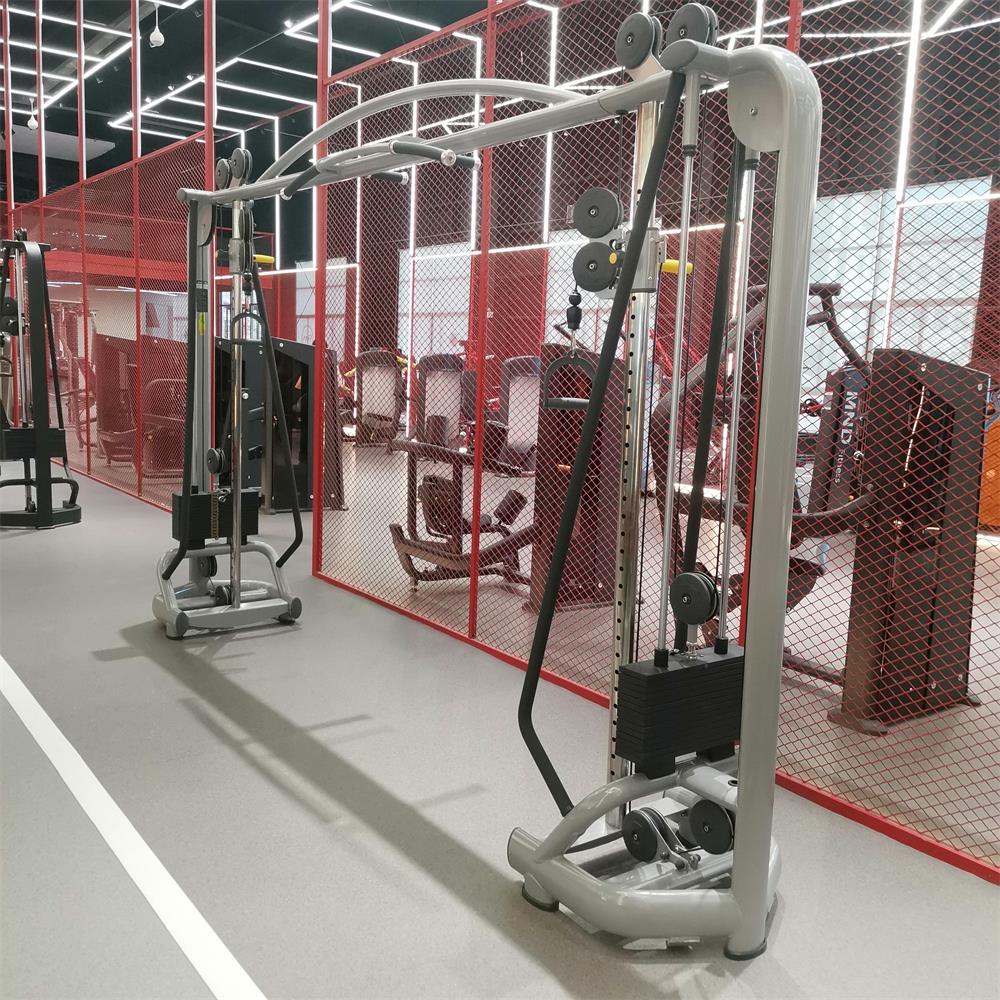
Standard fixed-path machines often restrict your natural movement mechanics. Single-stack cable systems frequently bottleneck advanced strength progression. Modern athletes need highly versatile tools. They must effectively overcome unilateral strength deficits. Enter the dual-stack architecture. It entirely redefines resistance training across modern home and commercial gyms. You can finally isolate weaker muscle groups. Shared weight distribution no longer masks critical imbalances. We designed this comprehensive guide as an objective evaluation. It thoroughly explores how a cable crossover machine dual stack directly impacts your exercise regimen. You will learn about functional training enhancements. We cover space utilization realities and long-term equipment value. We break down the precise mechanical advantages of independent pulleys. We also rigorously compare them against traditional single-stack setups. This ensures you make the best choice for your fitness facility.
Key Takeaways
Independent Resistance: Dual stacks allow for true unilateral training, correcting muscle imbalances without shared weight distribution.
Constant Tension: Cable systems provide uniform resistance across multi-planar movements, unlike the variable resistance of free weights.
Cable Ratios Matter: Most dual stacks utilize a 2:1 ratio, enabling explosive, sport-specific functional movements with a longer cable travel distance.
Space vs. Utility: While requiring a larger footprint than single-stack units, dual-stack functional trainers consolidate dozens of isolation and compound exercises into one station.
The Mechanics: How a Dual Stack Architecture Upgrades Functional Training
The Unilateral Advantage
The unilateral advantage fundamentally changes how we view resistance training. Single stack units inherently divide the selected weight load. If you pull both handles simultaneously, you share one central weight stack. This shared resistance creates inherent flaws for balanced development. Independent resistance completely fixes this common issue. Each side receives its own dedicated weight stack. If you select 50 pounds per arm, the machine delivers exactly 50 pounds per arm. The central nervous system adapts quickly to this independent loading. You build true bilateral strength without masked weaknesses. Your pressing and pulling movements become significantly more stable.
Eradicating Muscular Compensation
Eradicating muscular compensation remains crucial for long-term joint health. Stronger muscles naturally take over during heavy compound movements. We often unknowingly shift heavy loads toward our dominant side. A traditional barbell bench press easily hides weak triceps. Independent weight selection decisively stops this bad habit. The weaker side must perform entirely on its own. The dominant limb simply cannot assist it across the midline. This strict methodology creates truly balanced strength development. It forces neuromuscular adaptations in lagging muscle groups. You rebuild foundational strength from the ground up.
Simultaneous Multi-User Capacity
Simultaneous multi-user capacity adds massive practical value to any gym. Two different people can train at once. They stand on opposite sides of the sturdy central frame. They easily select their own independent weight loads. One person can perform triceps pushdowns. The other person can perform cable curls simultaneously. Commercial gyms and multi-athlete environments rely heavily on this space-saving efficiency. It keeps foot traffic flowing smoothly during peak workout hours. Personal trainers frequently use this feature for partner workouts. It maximizes floor space utility without compromising exercise quality.
Core Evaluation: Single Stack vs. Dual Stack Cable Machines
Load Distribution & True Weight
Single stacks possess distinct mechanical limitations regarding load distribution. Dual stacks offer highly accurate load tracking per limb. Single-pulley attachments often obscure individual limb power output. You might assume both arms push equally during a fly. In reality, one side almost always compensates. Dual stacks forcefully expose and correct these hidden muscular deficits. True weight tracking allows precise progressive overload. You can chart your left arm strength against your right arm. This precision prevents future sports injuries.
Cable Travel & Range of Motion
Cable travel metrics differ greatly between the two systems. Single stacks heavily limit your physical range of motion. Dual stacks often utilize a specialized 2:1 mechanical ratio. This specific pulley ratio literally doubles your available cable extension limits. You desperately need this long travel for dynamic exercises. Walking lunges require extensive cable reach across the floor. Broad functional movements demand unrestricted range of motion. A standard 1:1 ratio machine stops you mid-stride. The 2:1 ratio ensures smooth tension throughout expansive athletic drills.
Cost vs. Capability Analysis
Cost capability analysis requires a pragmatic look at gym utility. A dual stack certainly carries a higher upfront financial premium. However, it completely eliminates many extra peripheral equipment purchases. You do not need separate specialty machines for unilateral work. A versatile functional trainer consolidates dozens of machines into one footprint. You save money by avoiding redundant dumbbell and kettlebell sets. This massive consolidation easily justifies the initial premium for serious lifters. It centralizes your entire full-body workout into a single dedicated station.
System Capability Matrix
Feature
Single Stack System
Dual Stack System
Resistance Profile
Shared load across limbs
Independent load per limb
Cable Travel Limit
Standard (Often restrictive)
Extended (Supports walking drills)
Multi-User Capability
Not supported
Supports two users simultaneously
Imbalance Correction
Poor (Allows compensation)
Excellent (Forces unilateral effort)
Integrating the Functional Trainer: Movement & Outcome Capabilities
Multi-Planar Resistance
Multi-planar resistance remains absolutely vital for true functional fitness. Human bodies naturally move in three distinct spatial dimensions. Traditional gym machines aggressively lock you into a single rigid path. Cables allow you to train dynamically across different planes. You can move through the sagittal, frontal, and transverse planes. You transition seamlessly between them during a fast-paced circuit. This mimics real-world lifting mechanics perfectly. Your core engages constantly to stabilize the unpredictable resistance vectors. This three-dimensional freedom builds highly resilient, functional muscle tissue.
Sport-Specific Mimicry
Sport-specific mimicry truly shines on these versatile machines. Dual independent pulleys support incredibly complex athletic drills. You can load rotational core work safely and effectively. Athletes easily simulate explosive boxing punches. Golfers practice their rigorous golf swing mechanics under load. Cables provide constant tension throughout the entire movement arc. Free weights simply cannot replicate this continuous horizontal resistance. Gravity only pulls dumbbells straight down. Cables pull sideways, backward, and diagonally. This prepares your body for unpredictable athletic encounters on the field.
Rehabilitation and Joint Health
Joint health benefits immensely from smooth cable systems. Rehabilitation protocols require highly precise, controlled loading environments. Dual cables are inherently low-impact compared to dropping heavy free weights. You can safely load injured muscles at extreme ranges of motion. Physical therapy clinics consistently rely on this exact resistance profile. The continuous tension builds crucial tendon strength safely. It never jolts the delicate connective tissues. You can micro-adjust the weight stacks in small increments. This ensures a safe, pain-free progression back to peak performance.
Cable Crossover vs. Compact Functional Trainer: Footprint & Setup Risks
Defining the Spatial Requirements
Spatial requirements heavily dictate your final equipment choices. A traditional crossover features a very wide commercial stance. They often exceed 100 inches in total footprint width. They absolutely dominate floor space in any training facility. Conversely, a corner-optimized functional trainer saves precious square footage. It tucks neatly into unused gym corners effortlessly. You preserve the center of your room for benches or stretching. Always measure your exact room dimensions before browsing models. Width remains the biggest limiting factor for home buyers.
Ceiling Height Constraints
Ceiling height poses very real implementation constraints for buyers. Standard uprights range anywhere from 84 to 90 inches tall. Pull-up bars require even more additional head clearance above them. You need space to pull your chin over the top bar. Home and garage gyms must measure these vertical clearances carefully. Many basement gyms simply cannot accommodate standard commercial heights. You must account for drop ceilings and overhead lighting fixtures. Compact models exist specifically for shorter 80-inch ceiling limitations.
Stability and Anchoring
Stability and anchoring matter significantly for overall user safety. You generally must floor-mount wider commercial crossover units. Their wide geometry makes them slightly susceptible to tipping inward. They lack the self-stabilizing geometry of heavier compact frames. Heavier compact frames naturally resist tipping during heavy horizontal pulls. Their dense central gravity keeps them firmly planted on rubber mats. Always check the manufacturer guidelines regarding floor bolting requirements. Bolting into concrete provides ultimate peace of mind during explosive movements.
Shortlisting Criteria: What to Vet Before Purchasing
Weight Stack Capacity & Upgradability
Vetting your purchase carefully ensures long-term gym longevity. You must assess standard versus heavy-duty weight stacks carefully. A standard starter stack might offer 150 pounds per side. Heavy-duty commercial options usually exceed 200 pounds per side. Always remember the 2:1 mechanical advantage when calculating actual resistance. Moving 200 pounds on a 2:1 machine feels like 100 pounds. Advanced lifters easily outgrow standard 150-pound stacks during heavy seated rows. Consider machines offering optional weight stack upgrades later. Upgradability extends your initial investment lifespan significantly.
Pulley and Cable Material
Material quality dictates the smoothness of every single repetition. Subpar materials degrade quickly under heavy daily friction.
Nylon pulleys often develop grooved wear patterns over time.
Polyurethane-coated cables prevent dangerous fraying much better than standard braided steel.
High-grade sealed ball bearings ensure frictionless carriage movement under heavy loads.
Magnetic selector pins provide secure, vibration-free weight locking during explosive sets.
Adjustment Mechanisms
You will adjust the pulleys dozens of times per workout. The mechanisms must operate flawlessly without sticking or jamming.
Check the structural durability of pop-pin sliders under heavy horizontal loads.
Verify the uprights feature laser-etched numbering for quick bilateral alignment.
Ensure the swivel carriages fully support a complete 180-degree rotation.
Test the vertical adjustment handle for smooth, one-handed operation.
Inspect the guide rods for premium chrome plating to prevent rust.
Conclusion
A cable crossover machine dual stack remains the optimal choice. It perfectly serves users prioritizing unilateral functional training. Constant-tension resistance fundamentally transforms your daily exercise routine. It builds balanced, resilient muscle tissue while protecting joint health. The independent resistance entirely eliminates hidden muscular compensations.
Before making your final decision, consider these immediate next steps. Measure your precise floor space and ceiling height accurately. Assess your true weight capacity needs factoring in the 2:1 ratio. Review available accessory ecosystems like specialized handles and ankle cuffs. Verify the warranty covers cable wear and pulley bearings. Following these steps ensures a confident, lasting addition to your gym.
FAQ
Q: What is the difference between a 1:1 and a 2:1 cable ratio on a dual stack?
A: A 1:1 ratio provides direct weight resistance. Selecting 50 lbs yields 50 lbs of tension. A 2:1 ratio halves the felt resistance. Selecting 50 lbs provides 25 lbs of tension. However, a 2:1 ratio doubles your cable travel distance. This makes it ideal for explosive athletic movements and long walking lunges.
Q: Can you build muscle effectively with a functional trainer compared to free weights?
A: Absolutely. Cable machines provide constant tension throughout the entire range of motion. Free weights lose tension at specific mechanical angles due to gravity. Cables maximize time-under-tension mechanics perfectly. This continuous loading effectively stimulates muscle hypertrophy and improves overall functional strength progression.
Q: Is a cable crossover machine dual stack suitable for a home gym with low ceilings?
A: Standard commercial units often reach 84 to 90 inches tall. You also need clearance for pull-ups. Many basements cannot accommodate this specific height. Fortunately, compact residential alternatives exist. Shorter dual-stack models fit neatly beneath standard 80-inch ceilings while preserving all core functionalities.
Q: Do I need to bolt a dual stack cable machine to the floor?
A: It entirely depends on the machine footprint and total stack weight. Wide commercial crossovers require floor bolting for safety. They can tip during heavy, wide-angle pulls. Conversely, heavy compact trainers often feature a self-stabilizing frame. You rarely need to anchor these denser, heavier compact units.