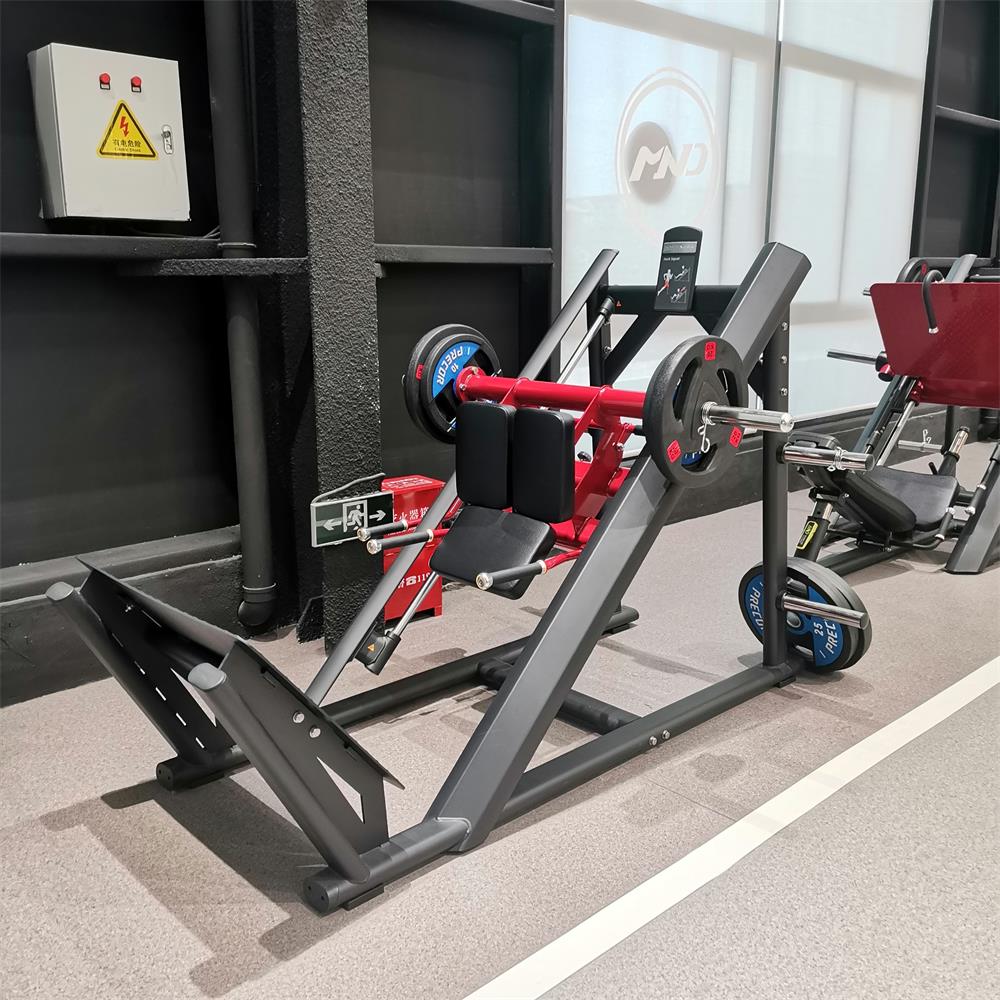
Equipping a fitness facility requires navigating high-liability, high-usage investments. You cannot afford subpar equipment on your gym floor. Poorly constructed leg machines quickly lead to biomechanical issues, frequent downtime, and severe injury liabilities. Finding genuine reliability protects your members and your business. We must differentiate true commercial-grade engineering from light-commercial or residential budget alternatives. Commercial models thrive under continuous high-volume use. Budget options simply collapse under relentless daily stress. This guide provides a rigorous framework for buyers. You will learn how to evaluate structural integrity, biomechanics, and long-term durability before purchasing. We will show you exactly what specific materials and designs ensure continuous performance. You will gain the confidence to select a machine built for elite lifters and everyday gym-goers alike.
Key Takeaways
Steel & Bearings: True commercial models require 11-gauge steel construction and industrial-grade linear bearings for friction-free operation under heavy loads.
Ergonomics & Safety: Adjustable, heavy-duty footplates and multi-tier safety catch systems are non-negotiable for mitigating facility liability and accommodating diverse user heights.
Standalone vs. Combo: Dedicated hack squats offer superior biomechanics; combo machines (Leg Press/Hack Squat) save space but introduce maintenance complexity and transition downtime.
Evaluating the Business Case for a True Commercial Hack Squat
Facility owners often underestimate the sheer volume of traffic leg stations experience daily. Hack squats represent staple leg day equipment for everyone from bodybuilders to casual fitness enthusiasts. Bottlenecks at this specific station drive intense member dissatisfaction. When people map out their weekly workout splits, they expect reliable and accessible machinery. Poorly angled machines cause immediate frustration. They force joints into unnatural positions and fail to isolate the target muscles properly. We consistently see gyms lose memberships simply because their strength floor lacks adequate, high-performing leg stations. Providing a premium lifting experience directly influences your retention rates.
Liability and compliance demand equal attention. Commercial facilities require robust equipment rated for continuous, heavy-duty usage. Sled derailment under a heavy load presents a catastrophic injury risk. Safety stop failures invite devastating lawsuits and permanent facility reputational damage. By investing in heavy-duty engineering, you actively mitigate these injury risks. You protect your users during muscular failure. Facilities must prioritize verifiable safety compliance over perceived initial savings.
Understanding the strict "commercial" distinction helps buyers navigate deceptive marketing. Many brands label their products "light-commercial" to mask residential-grade construction. True commercial distinction requires specific physical thresholds. We look for weight capacities exceeding 1,000 pounds. We demand high-density commercial upholstery designed to withstand thousands of sweaty repetitions without tearing. Furthermore, true commercial warranties do not void when placed in a high-traffic public facility. If a manufacturer limits their warranty exclusively to home use, the machine does not belong in your gym.
Core Solution Categories: Selecting the Right Architecture
Dedicated 45-Degree Hack Squats
Dedicated machines serve one precise purpose. They deliver the ultimate lower-body workout. The 45-degree angle provides optimal spine support throughout the entire range of motion. This specific geometry eliminates lumbar shearing forces commonly experienced during free-weight barbell squats. Users enjoy a natural strength curve. Because the machine serves only one function, transition time remains strictly zero. A member finishes their set, steps off, and the next person immediately steps in. However, dedicated units carry a significant drawback. They demand a large static footprint. Dedicating 50 square feet to a single-function machine requires ample floor space.
Combo Machines (Leg Press / Hack Squat)
Boutique studios and personal training spaces often face strict square footage limitations. Combo machines solve this spatial dilemma effectively. They maximize floor plan efficiency by merging two massive leg movements into one chassis. You gain valuable floor space. Despite this efficiency, combo units introduce notable compromises. The fixed track angle often compromises biomechanical optimization for one or both movements. Moving parts, such as pivoting backrests and dropping footplates, drastically increase wear-and-tear risks. Furthermore, transitioning the machine between modes takes time. This disrupts workout flow and causes queues during peak gym hours.
Plate Loaded Machine vs. Selectorized
Industry veterans understand why the plate loaded machine remains the undisputed standard for lower body training. Heavy compound movements demand massive weight ceilings. Elite lifters routinely push 600 to 800 pounds on leg stations. Selectorized weight stacks rarely exceed 300 to 400 pounds. Cable-driven selectorized systems also introduce high mechanical complexity. Cables stretch. Kevlar belts fray. Pulleys require constant alignment. In contrast, plate-loaded architectures operate on raw mechanical simplicity. They eliminate cables entirely. This design choice guarantees lower mechanical complexity and requires minimal maintenance over a decade of heavy use.
Equipment Architecture Comparison
Machine Architecture
Primary Advantage
Primary Limitation
Best Environment
Dedicated 45-Degree
Optimal biomechanics, zero transition time
Requires large footprint
High-volume commercial gyms
Combo (Press/Squat)
Maximizes square footage efficiency
Moving parts risk wear, compromised angles
Boutique studios, PT clinics
Plate-Loaded System
Infinite weight ceiling, high durability
Requires manual plate loading
Strength-focused training facilities
Key Evaluation Dimensions (Features-to-Outcomes)
1. Sled Mechanism & Guide Rods
The sled mechanism dictates the entire user experience. You must require linear bearings running on case-hardened steel guide rods. Linear bearings utilize rows of recirculating steel balls. They glide effortlessly along the steel tracks. This engineering creates completely friction-free operation, even under maximum payloads. Budget machines rely on nylon rollers. Nylon rollers flatten and degrade under commercial load frequencies. They develop severe flat spots over time.
Smoothness under asymmetrical loading separates premium machines from mediocre ones. Gym members rarely load weight plates perfectly evenly. A lifter might throw two plates on the left and one on the right. Inferior sleds twist and bind under uneven loads. Linear bearings housed in heavy-duty carriage assemblies prevent this twisting. They guarantee the carriage travels smoothly regardless of load distribution.
Common Mistake: Relying on nylon roller mechanisms for high-traffic environments. You will inevitably replace these rollers every six months as they warp under heavy plates.
2. Footplate Engineering
Biomechanical variance demands substantial footplate engineering. The platform must be oversized. Users utilize varying foot placements to target specific muscle groups. A high and wide stance primarily biases the glutes and hamstrings. A low and narrow stance aggressively targets the quadriceps. An oversized platform safely accommodates both extremes. The surface texture matters deeply. Look for industrial grip tape or diamond-tread steel. Sweaty gym shoes slip easily on smooth surfaces. Slipping under a heavy load causes immediate knee injuries.
Adjustability remains equally critical for biomechanical alignment. Human anatomy varies wildly. A fixed footplate forces some users into terrible ankle dorsiflexion angles. Look for a minimum of three-position angle adjustments. This allows users to customize the platform angle to match their specific ankle mobility.
3. Structural Integrity & Capacity
Do not compromise on frame specifications. The raw material dictates machine longevity. True commercial models utilize 11-gauge steel frames. The metal thickness resists bending and torsion. Tubing dimensions should measure at least 2x3 inches or 3x3 inches. Thinner gauge steel flexing under load creates a terrifying experience for the lifter.
Weight ratings provide a clear window into engineering confidence. Look for a minimum 1,000-pound sled capacity. While few members will ever squat 1,000 pounds, this high capacity acts as a safety buffer. It ensures the frame can absorb dynamic stress, dropped weight, and explosive repetitions from elite lifters safely. If a manufacturer rates their machine for only 500 pounds, they used substandard carriage bolts and weak welds.
4. Safety & Racking Systems
Muscular failure happens frequently on leg machines. Your equipment must manage this reality safely. Racking systems require ergonomic placement. Lockout handles must sit naturally near the user's shoulders or hands. Easy engagement and disengagement at the top of the movement prevent awkward reaching. If a user struggles to lock the machine out after a grueling set, the risk of collapse skyrockets.
Hard stops serve as the final line of defense. Adjustable bottom-out pins prevent crushing injuries. If a member completely fails a repetition at the bottom of the movement, the carriage must rest on solid steel pins, not on the user's spine. Multi-tier safety catch systems allow users of different heights to set their customized safety depth before beginning the exercise.
Best Practice: Always instruct floor staff to check the integrity of bottom-out pins weekly. A bent safety pin compromises the entire safety mechanism.
Purchasing the equipment represents only the first step. Implementation brings its own set of distinct challenges. Facility owners must prepare for spatial, logistical, and maintenance realities.
Spatial requirements often surprise new gym owners. You must factor in the full operational footprint. The static dimensions of the machine look reasonable on paper. However, you need considerable space to operate it. Consider these spatial realities:
Plate Clearance: You need at least 24 to 36 inches of empty space on both sides of the machine. Members need this room to safely slide 45-pound plates onto the weight horns.
Entry Paths: Users need clear walking paths to step onto the footplate without tripping over adjacent benches.
Storage Horns: Integrated weight storage horns extend the machine's width significantly. Account for fully loaded storage pegs when measuring your floor plan.
Delivery and assembly require professional coordination. Commercial machines routinely weigh between 400 and 600 pounds before adding any weight plates. Assess your facility's doorway clearances carefully. Many units arrive fully welded in large sections. They will not fit through standard single doors. You may need to remove double doors or load through garage bays. Flooring reinforcement also matters. Dropping massive weight loads transfers kinetic energy directly into your concrete. High-density rubber stall mats are mandatory underneath the frame. We highly recommend professional assembly to guarantee proper torque on carriage bolts.
Maintenance protocols define the lifespan of your investment. You cannot install the machine and forget about it. Establishing routine maintenance keeps your warranty valid and your members safe. Lubricating guide rods with silicone-based sprays prevents bearing friction. Floor staff must check bolt torque monthly. Vibration from heavy lifting naturally loosens carriage bolts over time. Inspecting carriage mechanisms and safety pins quarterly ensures no hairline fractures develop under heavy use.
Shortlisting Logic & Next Steps
Decision-making requires matching machine architecture to your specific business model. A massive commercial facility operates entirely differently than a private coaching studio. Let logic guide your shortlisting process.
High-volume commercial gyms should completely avoid combo units. You must prioritize dedicated, 11-gauge Commercial Hack Squat Machine models. Look strictly for linear bearing mechanisms. Reject any models using nylon rollers. Demand 10-year or lifetime frame warranties. Your environment features relentless traffic. Dedicated machines handle this abuse effortlessly while keeping gym flow moving.
Boutique studios and personal training clinics operate under different constraints. Evaluate high-end combo machines if square footage strictly dictates your layout. Because your traffic remains controlled and supervised, transition downtime matters less. However, you must still ensure the pivot mechanisms and locking handles are commercial-rated. Do not buy residential combo machines for a commercial studio.
Move forward with these actionable steps before finalizing your purchase:
Request detailed spec sheets from the manufacturer confirming 11-gauge steel and true linear bearings.
Verify the commercial warranty terms explicitly cover high-volume facility usage.
Measure your floor space, specifically calculating the extra width needed for plate loading.
Calculate total freight, delivery, and professional installation costs before issuing a final purchase order.
Conclusion
Equipping your facility with premium strength stations secures your long-term operational success. Sacrificing structural integrity or bearing quality for a lower upfront price always backfires. Inferior engineering guarantees increased facility downtime, higher maintenance labor, and vocal member complaints. You must base your final purchasing decision on heavy-load performance and verifiable safety mechanisms. A rigorously tested sled, oversized footplates, and heavy-duty steel frames protect your users from catastrophic injury. Evaluate your floor plan accurately to ensure footprint viability. By following this framework, you install machinery capable of handling thousands of heavy repetitions safely. Protect your members and elevate your strength floor by investing in uncompromising commercial quality.
FAQ
Q: What is the minimum weight capacity required for a commercial hack squat?
A: Commercial facilities demand extreme heavy-duty safety. The industry standard requires a minimum sled capacity of 1,000 pounds. This high threshold safely accommodates elite lifters loading multiple 45-pound plates simultaneously. It also ensures the steel frame absorbs dynamic stress during heavy, high-velocity repetitions without experiencing structural failure or dangerous bending.
Q: Are linear bearings better than rollers for a plate loaded machine?
A: Yes. Linear bearings utilize hardened steel balls running seamlessly along solid steel guide rods. They deliver flawless, friction-free movement under extreme loads. Nylon rollers eventually flatten out under continuous high load frequencies. Flat spots cause annoying stuttering and dangerous sticking points during the exercise movement.
Q: How much space do I need for a commercial hack squat machine?
A: You must calculate the full operational footprint, not just static dimensions. An average machine spans roughly 85 inches in length and 65 inches in width. However, you require an additional 24 to 36 inches of clearance on both sides. This extra room allows members to safely load and unload heavy weight plates.
Q: Do combination leg press/hack squat machines hold up in commercial gyms?
A: Combination machines handle moderate traffic effectively. However, moving parts like adjustable backrests and pivoting footplates introduce greater wear-and-tear risks. High-volume gyms experience excessive transition downtime when members switch between exercise modes. We recommend combination units primarily for lower-traffic boutique studios facing strict space limitations.