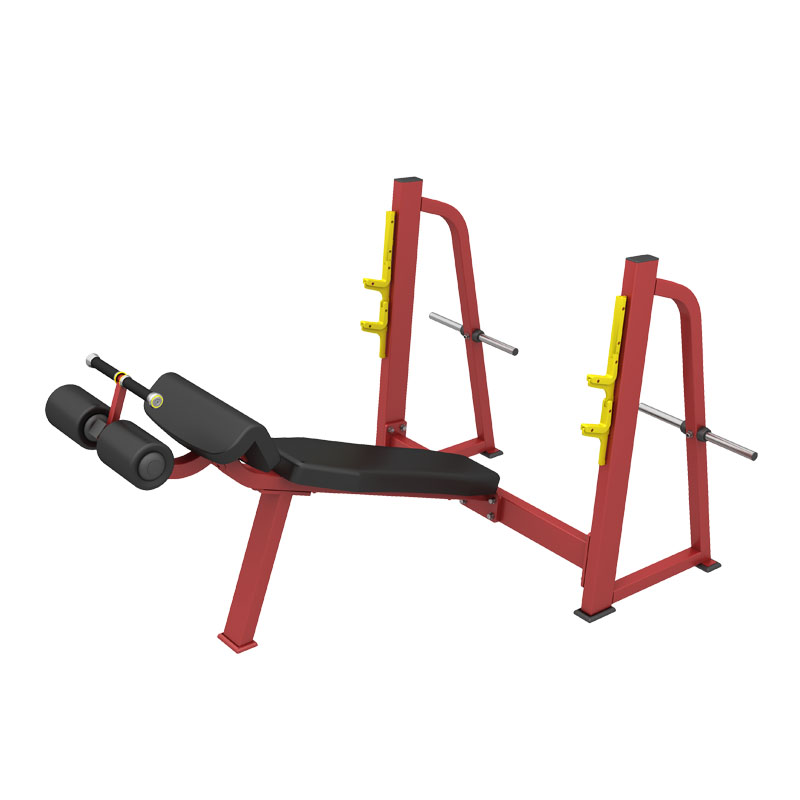
Transitioning from free-weight decline benches to plate-loaded alternatives is a strategic move. Commercial facilities and high-end home gyms make this shift daily. They aim to reduce liability. They also want to maximize muscle isolation for members. Gym owners constantly face choices about equipment upgrades. Selecting the right pressing stations impacts member satisfaction directly. Barbell declines often sit unused by beginners. They intimidate novice lifters. Fixed path options solve this problem effectively. You gain higher utilization rates across all demographic groups.
Unlike standard barbells, these units provide a fixed, converging path of motion. This design minimizes shoulder impingement risks significantly. It also eliminates the strict need for a human spotter. Members lift heavy loads safely alone. This guide outlines the biomechanical advantages you need to understand. We detail the facility integration requirements for your space. You will discover the technical specifications necessary for informed procurement. These insights help you build a safer, more effective strength training floor.
Key Takeaways
Safety & Accessibility: Plate-loaded decline presses remove the "guillotine risk" of barbell decline presses, making heavy lifting accessible to a broader demographic.
Biomechanical Efficiency: Iso-lateral converging movements ensure balanced strength development and superior lower pectoral activation.
Procurement Logic: Evaluating steel gauge, pivot bearings, and footprint is critical before adding this unit to a broader gym equipment package.
The Business Case: Why Facilities Are Upgrading to Plate-Loaded Decline Presses
Free-weight decline presses present inherent safety risks. Dropped bars trap lifters frequently. Facility owners face immense liability when accidents happen. Heavy barbells require attentive spotters. Many gym members train alone. They skip standard decline benches entirely due to fear. Utilizing a decline chest press plate loaded setup mitigates this liability. The machine catches the weight safely. Users release the handles without risking severe injury. This design instantly reduces member intimidation.
Catering to diverse demographics remains crucial for commercial success. Novice members need accessible equipment. They require guided motion paths to learn proper mechanics. Fixed machines provide this guidance perfectly. Elite bodybuilders also demand specific features. They need massive weight capacity for hypertrophy. A premium machine bridges this gap effortlessly. Beginners start light. Advanced athletes load hundreds of pounds safely.
A successful deployment relies on clear success criteria. You want high machine utilization daily. Track how often members use the new station. A good rollout reduces wear on standard flat benches. Traffic distributes more evenly across the gym floor. You will also notice positive member feedback. Users frequently report improved shoulder comfort. The biomechanical alignment prevents painful joint stress. This comfort keeps members returning consistently.
Best Practices for Deployment
Place the machine in highly visible strength zones to encourage novice use.
Train gym staff to demonstrate the seat adjustments clearly to new members.
Remove redundant free-weight decline benches to free up valuable floor space.
Biomechanics & Solution Categories: Evaluating Movement Paths
Understanding movement paths separates average equipment from premium solutions. Iso-lateral and bilateral designs offer very different training experiences. Iso-lateral machines feature independent arm movement. Your right arm pushes its own weight. Your left arm does the same. This separation prevents the dominant side from compensating. Balanced strength development requires this isolation. Weaknesses become obvious immediately. Users correct imbalances faster.
Bilateral designs use a single connected lever. Both arms push one unified bar. These models appear in lower premium tiers frequently. They cost less to manufacture. Structurally, they remain inferior for advanced training. A stronger right arm easily masks a weaker left arm. We strongly recommend iso-lateral designs for serious facilities.
Evaluate the converging axis of motion carefully. Quality machines press forward and inward. Your hands move closer together during the upward push. This arc mimics natural human movement perfectly. It maximizes contraction at the peak of the press. Straight-line pressing machines fail to stimulate the inner pectorals effectively.
Analyze the starting resistance and leverage. A high-quality plate loaded machine must offer a smooth resistance curve. Poor designs have "dead zones" at the bottom of the movement. The lever feels weightless initially. The weight then kicks in suddenly. Superior engineering provides consistent tension throughout the entire range. Unloaded levers usually weigh around 10 to 15 pounds. This light start accommodates rehabilitation patients safely.
Comparison: Iso-Lateral vs. Bilateral Designs
Feature
Iso-Lateral Design
Bilateral Design
Arm Movement
Fully independent arms
Single connected lever
Imbalance Correction
Excellent for fixing weaknesses
Poor, dominant side compensates
Cost Bracket
Premium / Commercial
Budget / Light Commercial
Muscle Activation
Maximum isolation
Shared load distribution
Core Evaluation Dimensions: Specifications to Outcomes
Frame and structural integrity dictate machine lifespan. Look strictly for 11-gauge steel frameworks. Thin steel bends under heavy use. Commercial environments demand durability. Thick steel ensures the machine remains stable. It handles maximal loads exceeding 400 lbs effortlessly. The frame will not flex or warp. Stability inspires user confidence during heavy lifts.
Examine the pivot points closely. Demand sealed, industrial-grade bearings. Avoid basic friction bushings. Bushings grind down over time. Metal dust accumulates. The pressing motion becomes stiff. Sealed bearings roll smoothly forever. They block out chalk dust effectively. This premium component prevents friction degradation over time. It dramatically reduces your maintenance downtime.
Adjustability impacts user experience directly. Gym members hate struggling with stiff seat pins. Gas-assisted seat adjustments solve this. They allow for rapid user turnover. A quick pull of a lever drops the seat smoothly. Ergonomics extend to the upholstery. Demand high-density foam pads. Cheap foam flattens out quickly. It develops permanent compression memory. High-density foam retains its shape after thousands of uses.
Weight horn capacity requires careful inspection. Loading pegs must be long enough. They need to accommodate multiple 45lb or 25kg plates easily. Check the surface coating on these pegs. Painted horns scratch immediately. Iron plates chip the paint off. The exposed metal rusts quickly. Look for hard chrome coatings. High-impact polymer sleeves also work well. They prevent ugly flaking effectively.
Verify the steel gauge thickness before purchasing.
Inspect the bearing housings for proper factory seals.
Test the gas-assisted seat lever for smooth operation.
Measure the weight horns to ensure adequate loading length.
Facility Integration and Spatial Planning
Spatial planning determines how well a machine integrates. A standard fixed decline unit requires significant floor space. The frame itself is large. You must also factor in safety clearances. Add an additional two to three feet of clearance around the weight horns. Members need room to load plates safely. Pinched fingers happen in cramped spaces. Clear pathways prevent tripping hazards.
Implement a logical zoning strategy. Place these machines in dedicated strength zones. Keep them adjacent to dedicated plate trees. Users hate carrying heavy iron across the gym. Proximity speeds up workout times. Group pressing variations together. Keep flat, incline, and decline presses in one row. This arrangement keeps traffic flow logical. It guides users through their chest routines naturally.
Procurement synergies matter for business owners. Upgrading a facility requires smart sourcing. Buying one machine incurs high shipping fees. Sourcing this unit as part of a comprehensive gym equipment package changes the math. Bundling unlocks substantial volume discounts. You receive unified shipping rates. Colors and finishes match perfectly. Consistent aesthetic branding elevates the entire gym floor. Members notice premium, matching equipment immediately.
Common Mistakes in Spatial Planning
Placing machines too close to mirrors, risking plate collisions.
Ignoring the outward swing arc of the pressing arms.
Failing to provide dedicated weight storage nearby.
Implementation Risks and Vendor Shortlisting Logic
Avoiding common pitfalls saves money and frustration. Purchasing equipment lacking proper biomechanical alignment is disastrous. Bad angles force shoulders into unnatural positions. Users experience joint pain quickly. They will abandon the machine. Always test the converging path before buying. Underestimating floor space is another major pitfall. The loading arcs require wide berths. Measure your available space twice.
Dissect the warranty fine print carefully. Shady vendors offer vague promises. Reputable manufacturers provide clear terms. Look for lifetime warranties on the structural frame. The steel should never fail. Moving parts need protection too. Demand three to five years of coverage on bearings and pulleys. Upholstery takes constant abuse. Ensure at least a 90-day warranty on pads and grips.
Buyers must take specific next steps. First, request precise dimensions. Get the length, width, and height. Ask the vendor for dynamic footprint diagrams. These show the machine fully extended. Second, verify the maximum load capacity per arm. Heavy lifters will test these limits. Third, cross-reference lead times. Global freight fluctuates wildly. Compare shipping costs carefully. Ask about delivery logistics. Do they offer inside delivery? Clarifying these details prevents unexpected delays.
Conclusion
Investing in commercial-grade pressing equipment is a calculated upgrade. It enhances facility safety significantly. You cater to advanced biomechanical needs effortlessly. This addition modernizes your strength floor immediately. Members appreciate the commitment to premium mechanics.
We strongly recommend prioritizing vendors who provide transparent specifications. Demand clear details on steel gauge thickness. Verify the quality of pivot mechanisms. Insist on true iso-lateral movement. Cutting corners on these features guarantees premature equipment failure.
Assess your current floor plan today. Review your capital budget for the quarter. Measure your available strength zones accurately. Request a quote or structural consultation. Integrate this powerful tool into your next equipment rollout seamlessly.
FAQ
Q: What is the ideal starting weight on a plate loaded decline press?
A: Most commercial iso-lateral machines feature a lightweight starting resistance. The unloaded lever usually weighs 10 to 15 lbs per arm. This light starting point makes the movement highly accessible for beginners. Novice lifters can master the pressing form safely. Advanced users easily add heavy resistance plates later. This versatility suits any training level perfectly.
Q: Does a plate-loaded machine require specialized maintenance?
A: These machines need minimal upkeep. Routine maintenance involves wiping down upholstery daily. You must check structural bolts quarterly for tightness. Ensure the sealed bearings remain free of dust. Chalk buildup damages moving parts over time. Regular cleaning prevents friction degradation. Facility managers should schedule quick monthly inspections. This routine guarantees long-term durability.
Q: Can this replace a standard decline barbell bench in a commercial setting?
A: Yes. Many modern facilities now phase out free-weight decline benches entirely. Facility owners favor fixed machines. They offer superior safety profiles. Members train heavy safely alone. Hypertrophic outcomes remain comparable. In many cases, targeted muscle isolation improves. You eliminate the dangerous guillotine risk entirely. Replacing traditional benches modernizes your strength floor effectively.
Q: Should I buy this individually or as part of a gym equipment package?
A: Bundling is highly recommended for commercial buyers. Buying everything together ensures matching frame colors. Upholstery styles remain consistent across your floor. Standardized maintenance protocols simplify facility management. You also secure significant volume discounts. Freight costs decrease drastically when shipping bulk items. Unified aesthetics elevate your brand presentation instantly.