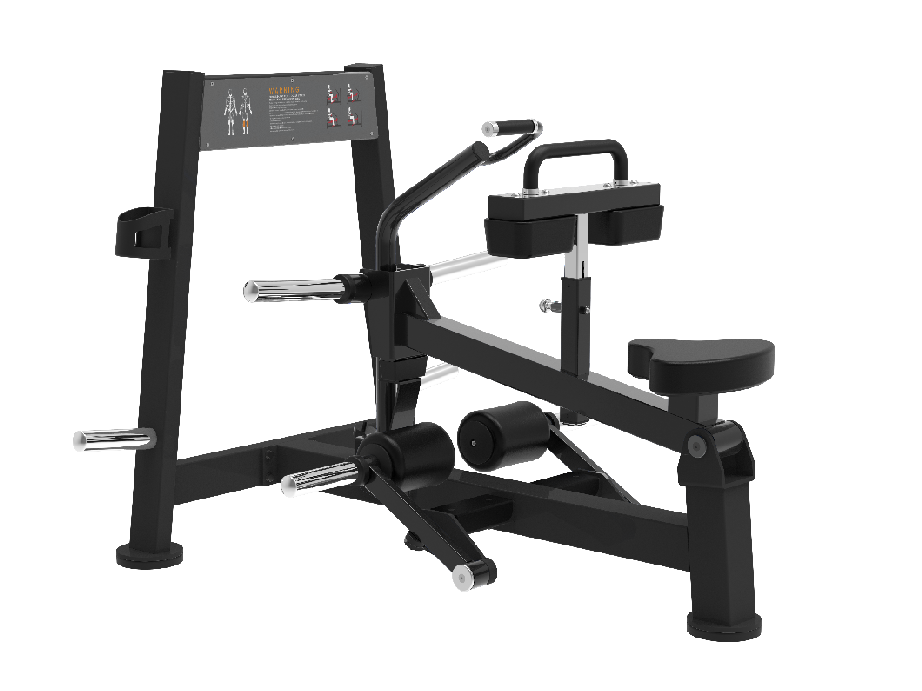
Free-weight training remains a staple for many fitness enthusiasts. Relying solely on barbells brings a significant limitation. Systemic fatigue and lower back stabilization often fail before your target leg muscles reach maximum hypertrophy. You simply run out of energy or core strength before fully stimulating the quads, hamstrings, or glutes. Dedicated machines solve this problem by offering safe, isolated progressive overload. They remove the complicated balancing act required during heavy barbell squats. This allows you to push closer to true muscular failure safely. Choosing the right Leg Day Equipment transforms your lower body workouts. This guide evaluates top commercial and high-end residential options. We analyze biomechanics, footprint, and cost-to-value ratio. We will explore how to streamline your purchasing decision for the perfect home or facility setup. Read on to discover exactly what to look for when upgrading your training arsenal.
Key Takeaways
Compound Efficiency: Leg press and hack squat machines offer the highest return on investment for overall lower-body mass but require the largest floor footprint.
Loading Mechanisms Matter: A plate loaded machine generally provides higher weight capacities and lower maintenance costs compared to selectorized (weight stack) alternatives.
Space Constraints: Combo machines (e.g., Leg Extension/Curl combos or Leg Press/Hack Squat combos) are critical for home gyms or facilities with under 500 sq. ft. of available floor space.
Biomechanical Fit: Not all machines fit all users; adjustability in seat depth, backpad angle, and footplate size are non-negotiable evaluation metrics.
Evaluation Criteria: How to Assess Leg Day Equipment
Selecting the right gear requires more than just checking price tags. You must evaluate the engineering behind each piece. A poorly designed unit limits range of motion. It can even cause joint pain over time. We use four primary criteria to assess equipment viability.
Biomechanical Alignment & Adjustability: The unit must accommodate multiple user heights. It should never compromise joint safety. Look for linear bearings in heavy sleds. They ensure a perfectly smooth glide track. For rotary movements, adjustable cam profiles are essential. They match the resistance to your natural strength curve.
Footprint vs. Versatility (The Space-to-Utility Ratio): Floor space commands a premium. Assess whether a single-station unit justifies its square footage. Compare it to a multi-function unit. A dedicated extension station feels great. However, a combo unit might make more sense for a smaller room.
Maximum Load Capacity: Always evaluate the ceiling for progressive overload. Beginners gain strength rapidly. A unit maxing out at 300 lbs is insufficient. Long-term lower body development requires serious weight capacity. Buy gear you can grow into, not out of.
Construction & Durability: Identify non-negotiable structural elements. Frames should use 11-gauge steel. Upholstery needs high-density foam to prevent bottoming out under heavy loads. Check the pivot points carefully. They should feature heavy-duty sealed bearings instead of cheap plastic bushings.
Best Practice: Always test the adjustment pins. Pop-pins should glide easily and lock securely into place. Struggling to change a seat position interrupts your workout flow.
Core Equipment Categories for Lower Body Muscle Building
Understanding equipment categories helps you prioritize your purchases. Different units serve distinct physiological goals. We break them down into three essential groups.
Compound Mass Builders (Leg Press & Hack Squat)
Compound movements engage multiple joints simultaneously. They form the foundation of any serious lower body routine. These units excel at moving massive loads safely.
Target Audience: Buyers prioritizing heavy, compound lifts. They want maximum quad and glute engagement. They also want reduced spinal loading compared to barbell squats.
Evaluation Lenses:
Consider a 45-degree linear leg press versus a vertical model. The 45-degree version offers a massive weight rating. It also demands a huge footprint. The vertical model saves space. However, it can feel intimidating for beginners.
Hack squats force deep knee flexion. This promotes extreme quad dominance. The back pad provides rigid spinal support. You can drive entirely through your heels and mid-foot.
Verdict: Best for raw mass. They hold the highest space requirements. They also require the most significant budget allocation.
Isolation Mechanics (Leg Extension & Leg Curl)
Isolation movements target one specific joint. They eliminate assistance from secondary muscle groups. This provides intense, localized stimulus.
Target Audience: Buyers needing targeted quad and hamstring development. These units effectively address muscular imbalances. They help rehab knee injuries when used properly.
Evaluation Lenses:
Compare seated versus prone leg curls. Seated versions put the hamstrings in a stretched position across the hip joint. This stretch under load often yields better hypertrophy results. Prone versions feel more traditional but require slightly more floor space.
Evaluate the viability of combo machines. Dual-function units save enormous space. They must not compromise the resistance profile. Ensure the pivot axis aligns perfectly with your knee joint in both modes.
Verdict: Essential for complete hypertrophy. They boast a smaller footprint. They remain highly accessible for users of all experience levels.
Many trainees neglect the posterior chain and lower legs. Specialized units fix this oversight. They provide targeted stimulus to stubborn muscle groups.
Target Audience: Advanced trainees and facilities. They need specialized posterior chain focus to enhance athletic performance.
Evaluation Lenses:
Analyze seated versus standing calf raise mechanics. Seated models isolate the soleus muscle underneath the calf. Standing models hit the larger gastrocnemius muscle. Proper muscle building relies on developing both areas.
GHD (Glute Ham Developer) footprint and versatility. A good GHD requires substantial room. It allows for intense eccentric hamstring loading. You can also use it for back extensions and core work.
Common Mistake: Avoid buying a calf block instead of a dedicated unit if you have the budget. Free-weight calf raises on a block often lead to poor balance and missed reps. A dedicated unit locks you into the perfect axis of motion.
The Loading Dilemma: Plate Loaded Machine vs. Selectorized
Choosing your preferred resistance style dictates your future workout experience. Both loading styles offer distinct advantages and drawbacks. Your choice depends heavily on your existing gym setup and budget.
The Case for the Plate Loaded Machine
Many purists prefer manually adding weight discs. It feels rugged and traditional. It also provides a direct line of resistance.
Pros: They feature a lower initial cost. They have no friction from weight stack guide rods. This provides a wonderfully smooth eccentric phase. You gain infinite micro-loading potential by adding fractional plates. They boast a much higher overall weight capacity. Adding a plate loaded machine is ideal for home gyms already equipped with Olympic plates.
Cons: Manual loading takes considerable time. Stripping hundreds of pounds off a sled becomes a workout itself. They also necessitate separate plate storage trees. This eats into your available floor plan.
The Case for Selectorized (Weight Stack) Machines
Selectorized units use a pin to select a specific weight from a built-in stack. They dominate commercial gym floors for a reason.
Pros: They offer unmatched convenience. You can perform drop sets in seconds. Quick transitions keep your heart rate up. They feature a self-contained footprint. You do not need extra plate storage nearby.
Cons: They require a higher upfront cost. Weight limits remain capped. A standard stack usually stops at 200 to 300 lbs. Advanced lifters outgrow this quickly on certain exercises. Cables and pulleys also require ongoing maintenance.
Purchasing Recommendation
Mix both styles for the ultimate training environment. Choose plate-loaded models for heavy compound movements. Leg presses and hack squats demand massive loads. Selectorized stacks rarely provide enough resistance here. Choose selectorized models for isolation movements. Leg extensions and curls benefit greatly from rapid weight changes. This strategy optimizes both your budget and your hypertrophy protocols.
Table 1: Loading Mechanism Comparison
Feature
Plate Loaded
Selectorized (Weight Stack)
Initial Investment
Generally lower (assuming you own plates)
Higher (due to integrated stack)
Weight Capacity
Extremely high (often 1000+ lbs)
Capped (usually 200-300 lbs)
Transition Speed
Slow (manual loading)
Fast (pin selection)
Maintenance
Minimal (mostly lubricating bearings)
Moderate (cable tension, guide rod lube)
Footprint
Requires extra room for plate storage
Self-contained unit
Implementation Risks: What to Verify Before Buying
Purchasing heavy gym equipment introduces logistical challenges. You must prepare your space accordingly. Ignoring these risks leads to damaged property or unusable gear.
Floor Load-Bearing Limits
Heavy units exert intense pressure on your flooring. A 45-degree sled weighs roughly 300 lbs empty. Adding 1,000 lbs of plates pushes the total weight to extreme levels. Add the user's body weight on top of that. The fully loaded unit easily exceeds 1,500 lbs. Ground-floor installation works best. Concrete slabs handle this weight effortlessly. Upper-floor installations pose structural risks. You often require professional structural reinforcement before placing a heavy sled on wooden joists.
Assembly Complexity
Commercial-grade lower body units do not arrive in small parcels. They arrive via freight shipping. Expect a massive pallet containing multiple heavy boxes. Delivery drivers usually perform curbside drop-off only. You must move the pieces inside yourself. Assembly takes hours. It often requires two people to align heavy steel frames. Factor in professional assembly costs if your time or tools remain limited. It saves immense frustration.
The "Combo Machine" Compromise
Dual-function units look perfect on paper. They promise two exercises in half the space. Warn buyers carefully here. Poorly engineered models suffer from awkward transition mechanisms. You might spend five minutes switching from extensions to curls. Some models also provide a sub-optimal range of motion. The pivot point cannot always perfectly align for both exercises simultaneously. Verify user reviews thoroughly. Look specifically for comments regarding the switch-over process. Ensure the pop-pins and seat adjustments operate seamlessly.
Conclusion
Building massive legs requires consistency, effort, and the right tools. Free weights take you far. However, dedicated units push you past plateaus safely. They isolate muscles without exhausting your central nervous system.
Summarize your shortlisting logic based on your specific situation. For maximum space efficiency and budget constraints, invest in a high-quality dual-function extension and curl unit. It delivers massive hypertrophy benefits in a tight footprint. For unrestricted development and larger budgets, prioritize a 45-degree sled or hack squat unit. These heavy-duty pieces build serious overall mass.
Take clear next steps today. Grab a tape measure. Measure your available floor space accurately. Always account for loading clearance on the sides of the unit. You need at least two feet of working room to slide plates on and off safely. Inventory your current Olympic plates. Ensure you have enough weight to challenge yourself before finalizing your purchase.
FAQ
Q: Can I build leg muscle effectively without large machines?
A: Yes, using barbell squats, Bulgarian split squats, and Romanian deadlifts. These free-weight staples are highly effective. However, machines remove the balance component. This allows closer proximity to true muscular failure. They offer a lower risk of injury when pushing to your absolute limits.
Q: What is the minimum floor space required for a commercial-grade leg press?
A: Typically, a standard 45-degree model requires at least an 8 ft by 5 ft footprint. You must also add an additional 1-2 feet of clearance on each side. This extra space ensures you can safely load and unload heavy weight plates without hitting walls.
Q: Are leg press / hack squat combo machines worth the investment?
A: Yes, for residential or light-commercial use where space is at a premium. They provide excellent heavy compound options. However, expect a slightly longer setup time between exercises. You must manually adjust the footplates, seat angles, and backrests during the transition phase.