Outfitting a facility requires serious capital and strategic planning. Every purchase decision shapes your daily business operations fundamentally. You need physical assets yielding high returns consistently over time. The right equipment mix directly impacts your member acquisition rates. It improves long-term retention and minimizes future maintenance overhead. However, balancing limited floor space presents a major core challenge. Owners must cater to incredibly diverse member demographics simultaneously. Budget constraints often force complex and difficult compromises. Facility managers must strictly avoid trendy equipment boasting high failure rates. This guide provides a highly actionable, evidence-based evaluation framework. We help owners select durable commercial-grade strength assets securely. You will learn how to properly balance critical footprint requirements. We outline exact criteria for evaluating modern machine mechanics. You will understand how to build a bulletproof procurement strategy today. Smart planning saves thousands in future repair bills. It transforms empty square footage into highly profitable training zones.
Key Takeaways
A strategic mix of free weights, selectorized, and plate-loaded equipment maximizes floor throughput and serves all experience levels.
Total Cost of Ownership (TCO)—including maintenance, warranty coverage, and parts availability—is more critical than the initial purchase price.
Facility layout and equipment footprint must account for user safety, traffic flow, and ADA compliance, not just maximum capacity.
Prioritize proven mechanical designs and 11-gauge steel construction over unverified digital fitness tech for core strength areas.
Defining Your Commercial Gym’s Strength Floor Strategy
Mapping equipment selection to your primary member base is crucial. General populations require more guided, selectorized machines for safety. These units provide intuitive usage for absolute fitness beginners. Conversely, athletic or powerlifting facilities demand heavy-duty racks and platforms. We highly recommend auditing your local demographic data thoroughly. Do not guess what your members want to use. Survey prospective clients before finalizing any massive purchase orders. Your layout must directly reflect their daily training styles.
You must calculate the exact square footage available for training. Space dictates your absolute maximum safe equipment capacity. Always define the required clearance between individual training stations. Industry standards strictly recommend 24 to 36 inches of free space. This generous gap ensures user safety and ADA accessibility compliance. Overcrowded zones frustrate members and elevate your legal liability risks. Common mistakes include ignoring the space needed for weight plate storage.
Consider equipment throughput during your busiest peak operating hours. You should evaluate how quickly users transition across different stations. High-throughput facilities benefit immensely from easily adjustable selectorized units. Quick pin adjustments keep heavy foot traffic moving smoothly. We advise mapping out common superset paths on your floor. Members will abandon their routines if wait times become excessive. Smooth traffic flow prevents frustrating bottlenecks near popular machines.
Core Categories of Strength Training Equipment
Selectorized (Pin-Loaded) Machines
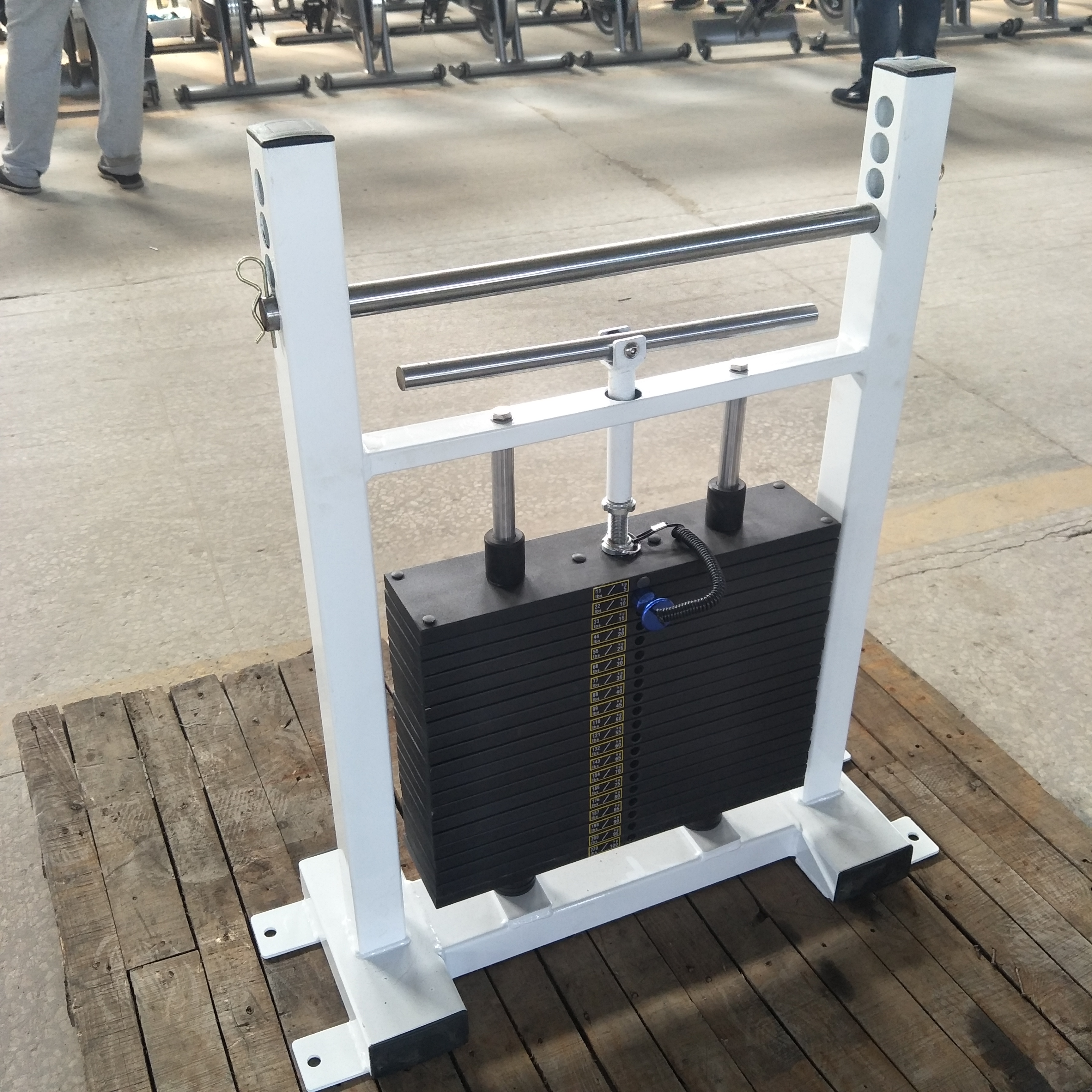
These units remain absolutely essential for beginners and isolated muscle training. Every modern commercial gym needs a robust selectorized circuit. They guarantee high throughput because weight adjustments happen instantly. Users simply move a magnetic pin to change resistance safely. When selecting these units, demand exceptionally smooth cam movements. You must ensure the manufacturer provides fully enclosed weight stacks. Enclosed stacks significantly reduce dangerous pinch-point liabilities. We also recommend demanding durable Kevlar belts or high-tensile cables. Kevlar outlasts standard steel cables and requires far less lubrication. Check the seat adjustment mechanisms for ease of use. Spring-loaded pneumatic seats offer a premium feel for members.
Plate Loaded Machines
This category bridges the functional gap between selectorized units and free weights. They appeal strongly to intermediate and advanced fitness users. You must include a dedicated plate loaded machine section in your facility. They inherently reduce your long-term maintenance needs drastically. You have zero internal cables or selector pins to break. They allow users to push much heavier, unilateral loads safely. Focus closely on biomechanical convergence and divergence movement paths. Natural movement arcs protect shoulder and elbow joints under maximum loads. Look for extended weight horns to accommodate thick bumper plates.
Free Weights and Racks
Free weights represent the true anchor of any successful strength floor. This encompasses heavy dumbbells, Olympic barbells, power racks, and Smith machines. They accommodate infinite movement variations for all experience levels. We suggest purchasing premium urethane-coated dumbbells instead of rubber. Urethane prevents rapid degradation, unpleasant odor buildup, and cosmetic damage. Demand 11-gauge steel construction for all your power racks. Ensure standardized knurling patterns across your entire barbell fleet. Consistent grip textures keep serious lifters fiercely loyal to your facility. Provide ample secure storage trees to keep plates off the floor.
Key Evaluation Dimensions for Commercial Procurement
Commercial environments destroy inferior fitness equipment extremely rapidly. You must establish strict minimum material specifications for all vendors. The baseline commercial requirement demands 11-gauge steel tubing minimum. Structural frames should feature a robust 2x3 inch profile. Inspect the entire manufacturing process closely during your vendor review. Welds should appear continuous rather than cheap spot-welded joints. Powder coating must remain chip-resistant against daily aggressive plate impacts. These specific details separate professional gear from cheap residential alternatives. Best practices dictate asking for actual material specification sheets.
Proper ergonomics ensure universal accessibility for your entire client base. The equipment must accommodate diverse body types perfectly comfortably. Designs should fit the 5th percentile female up to the 95th percentile male. Always test the specific resistance curve yourself before buying. You need tension maintained evenly throughout the full range of motion. Poor biomechanics lead directly to joint strain and chronic member complaints. Avoid machines featuring awkward starting positions or jerky descent phases.
Evaluate all long-term warranty agreements meticulously before signing contracts. You need comprehensive financial protection for your major capital investment. Analyze the entire vendor ecosystem thoroughly. Assess the manufacturer’s regional supply chain reliability and logistics. Ask sales representatives for precise mean-time-to-repair (MTTR) performance metrics. You also desperately need guaranteed local technician availability. Fast localized repairs keep your machines online and your members satisfied.
Standard Warranty Benchmarks
Component Category
Standard Duration
Critical Considerations
Structural Frames
10 Years to Lifetime
Look for strict exclusions regarding environmental damage or improper uncertified installation.
Moving Parts (Bearings, Pulleys)
1 to 5 Years
Check if skilled labor costs are fully included alongside the replacement parts.
Upholstery and Grips
90 Days to 6 Months
High-wear items often require easy self-servicing; keep spare parts stocked locally.
Implementation Risks and Floor Plan Realities
Many ambitious facility owners fall into the dangerous overcrowding trap. Stuffing too much heavy equipment into limited space creates severe issues. It actively increases member injury risk during peak evening hours. Cluttered floors drastically degrade the overall premium user experience. You must maintain strict daily adherence to walkway compliance. Give people plenty of room to load and unload barbells safely. Floor plans need adequate breathing room to feel truly professional. A common mistake is forgetting the footprint of fully extended benches.
You absolutely cannot ignore strict load-bearing and flooring constraints. Heavy free weight zones demand specialized high-density rubber flooring. We highly recommend installing durable mats spanning 3/4 inch to 1 inch thick. Thick flooring protects your underlying concrete subfloor from dropped deadlifts. It also dampens ambient gym acoustics significantly. Managing noise transfer keeps neighboring commercial tenants and your staff happy. Plywood lifting platforms add another necessary layer of subfloor protection.
Always prioritize sheer utility over passing digital fitness gimmicks. Avoid allocating your core budget to highly specialized novelty machines. Single-use stations waste incredibly valuable, revenue-generating square footage. Ensure foundational human movement patterns are fully covered first. You need robust push, pull, squat, and hinge training stations. Multi-use functional cable trainers offer far better returns than trendy digital mirrors. Members ultimately value reliable iron over easily broken touchscreen interfaces.
Shortlisting Suppliers and Next Steps
You must execute a rigorous, in-person equipment pilot test. Never buy commercial gym assets purely from a glossy digital catalog. Facility management or lead trainers must physically test the actual equipment. Evaluate the true biomechanics of a brand’s selectorized and plate-loaded lines. Feel the cable smoothness and inspect the seat adjustment mechanisms. Hands-on testing reveals hidden manufacturing flaws instantly. It prevents you from installing uncomfortable machines members refuse to use.
Structuring your Request for Proposal (RFP) properly guarantees better vendor bids. You should demand comprehensive logistical details from every single supplier. Follow these sequential steps when finalizing your procurement requests:
Require vendors to supply incredibly accurate 3D floor plan renderings.
Mandate itemized breakdowns covering all hidden freight and installation costs.
Ask for standardized, easily executed preventative maintenance schedules for every machine.
Verify promised lead times explicitly in the finalized, legally binding contract language.
Request robust local client references to verify actual post-sale support quality.
Commercial equipment often carries a frustrating 12-to-16-week lead time. You must plan your procurement cycles incredibly carefully. Align your equipment delivery dates directly with facility build-out schedules. Early deliveries force you into expensive, unsecured warehouse storage situations. Late deliveries create devastating dead rent periods before your grand opening. Phased equipment rollouts help owners manage cash flow and complex installation logistics better.
Conclusion
Sourcing premium Strength Training Equipment represents an exercise in strict risk mitigation. You must target your specific local member demographic accurately. Intelligent, data-driven floor planning maximizes both user safety and daily usability. We strongly recommend focusing strictly on heavy-duty 11-gauge steel construction. Secure favorable long-term warranties before finalizing any large purchase orders. Maintain a perfectly balanced ratio of heavy free weights to guided machines. This ensures you serve both absolute beginners and advanced lifters perfectly. We encourage you to audit your current architectural floor plan today. Begin drafting your detailed vendor RFPs using the strict criteria outlined above. Smart, calculated procurement drives your long-term facility profitability and stellar reputation.
FAQ
Q: What is the standard lifespan of commercial strength training equipment?
A: Commercial frames typically last 10 to 15 years or more under heavy use. Wearable components like cables, Kevlar belts, and upholstery require replacement every 1 to 3 years. This frequency depends entirely on your daily facility volume and preventative maintenance routines.
Q: Why choose a plate loaded machine over a selectorized machine?
A: They offer significantly lower maintenance because they utilize fewer moving parts. You eliminate cable snapping and jammed selector pins entirely. They also provide higher maximum weight capacities. Advanced lifters prefer their natural, biomechanically correct converging and diverging arc movements.
Q: How much budget should be allocated to strength vs. cardio equipment?
A: The exact split depends on your specific gym model. However, current industry trends are shifting heavily toward a 60/40 or even 70/30 split in favor of strength. Evolving consumer training habits prioritize resistance training and heavy lifting over traditional steady-state cardio.
Q: What gauge steel is necessary for a commercial gym?
A: We consider 11-gauge steel the absolute baseline for commercial durability. It prevents frame warping under maximum loads. This thickness provides essential liability protection. It ensures your racks and machines withstand daily abuse from thousands of heavy user repetitions.