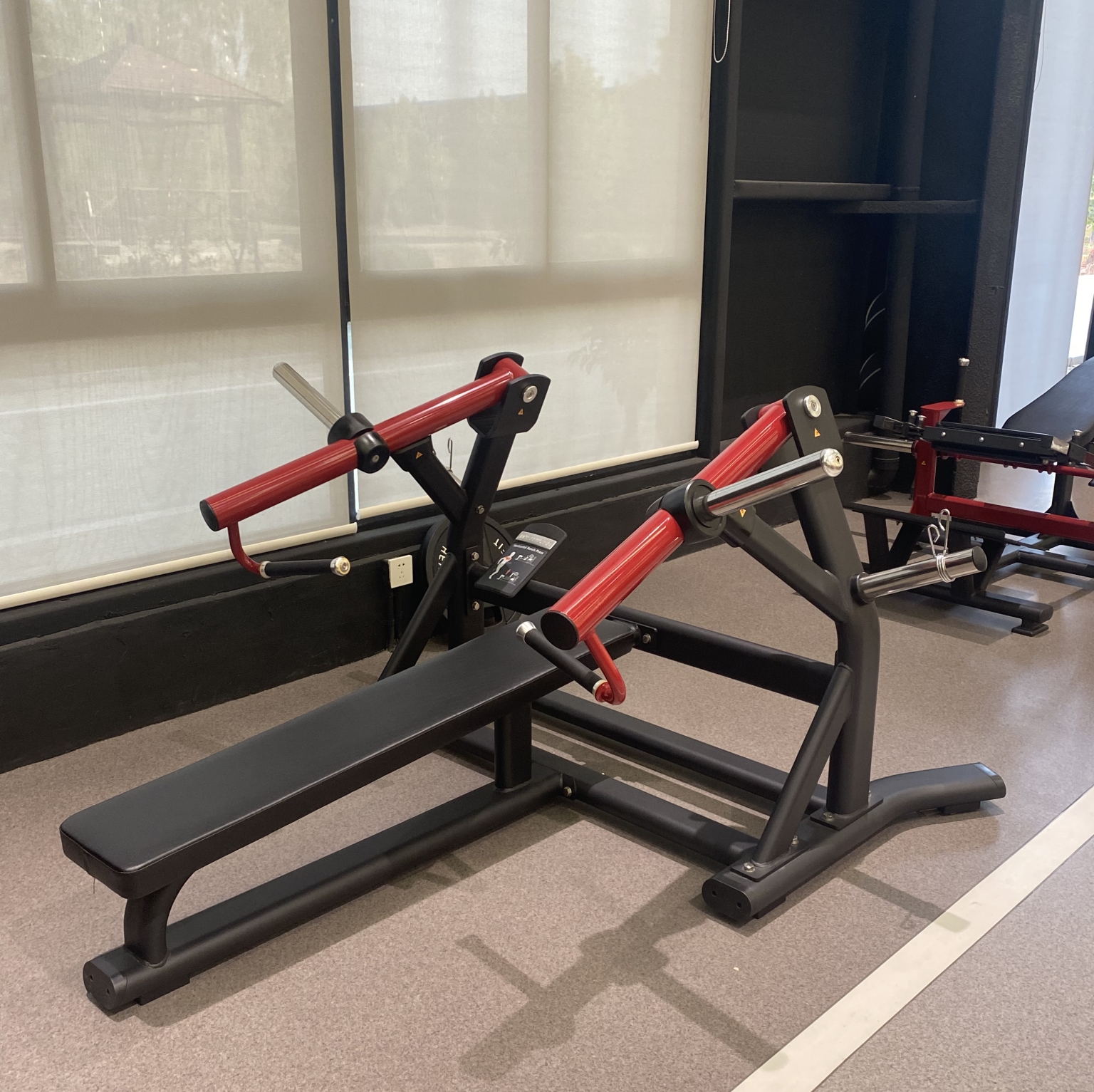
You stand at a critical juncture in your fitness journey. Whether refining a serious strength training program or outfitting a modern gym facility, choosing the right equipment shapes your results. The sheer volume of chest equipment available can confuse even experienced lifters. Investing your time and budget correctly requires looking past flashy marketing to understand true biomechanical value. A suboptimal choice wastes floor space and limits potential muscle growth. We will deconstruct the exact mechanics, practical advantages, and structural footprint of these specialized pressing units. You will learn how they target specific user profiles and activate muscle tissue based on real-world evidence. By the end of this guide, you will know exactly if an iso lateral chest press machine deserves a place in your training ecosystem.
Key Takeaways
Independent Arm Movement: Unilateral resistance corrects strength imbalances and prevents dominant-side compensation.
Converging Biomechanics: Replicates the natural arc of the pectoralis major for optimal peak contraction compared to fixed-plane machines.
Safety at Failure: Plate loaded machine design allows for maximum load testing without requiring a spotter, ideal for hypertrophy training.
Investment Criteria: Requires significant floor space and existing Olympic plates, making it a targeted choice for serious home gyms or commercial facilities.
The Biomechanics: How the ISO Lateral Chest Press Machine Works
Defining "Iso Lateral"
Engineers design fitness equipment around specific kinetic principles. The term "iso lateral" breaks down into two distinct concepts. "Iso" means equal. "Lateral" refers to the sides of the body. When combined, this engineering concept delivers equal, independent resistance to both your left and right sides. Traditional bars force both arms to move together. This design uncouples them. Your left arm presses its designated load completely independent of your right arm. If your right arm fails, your left arm can still complete the repetition. This isolation ensures balanced mechanical tension across your entire upper body.
The Converging Axis of Motion
Your chest muscles do not push in a perfectly straight line. The pectoralis major primarily functions to bring the arm across the body. We call this horizontal adduction. A standard smith machine or barbell forces your hands into a strictly linear path. They travel straight up and straight down. Iso lateral technology changes this dynamic entirely. As you push the handles forward, they naturally sweep inward. This converging axis mirrors natural shoulder function. You achieve a deeper stretch at the bottom of the movement. At the top, your hands finish closer together. This arc maximizes peak contraction in the muscle fibers. It feels smoother and produces better engagement than straight-bar pressing.
Plate Loaded Mechanics
A true plate loaded machine operates on a specific resistance curve. Unlike a selectorized cable stack providing uniform tension, plate loaded levers change the feel of the weight. Gravity and leverage dictate the load profile. When you begin the press, the weight often feels heaviest because you lack mechanical advantage. As you press the handles outward, the lever arm shifts. The movement usually feels slightly lighter at the peak contraction point. This natural resistance curve aligns perfectly with human strength profiles. You are naturally weaker in the fully stretched position and stronger at lock-out. The machine geometry accommodates this reality beautifully.
Core Benefits for Hypertrophy and Strength Training
Correcting Asymmetry
Nobody possesses perfect muscular symmetry. Most lifters heavily favor their dominant side during heavy compound movements. When you bench press with a barbell, your stronger arm unconsciously takes over to drive the bar upward. This systemic compensation leads to noticeable imbalances over time. Independent handles solve this problem completely. They force your weaker side to perform the exact same work as your dominant side. Your stronger arm cannot assist. If your left side fails at eight repetitions, the set ends. This strict unilateral requirement forces lagging muscles to catch up, creating balanced aesthetics and function.
Enhanced Range of Motion (ROM)
Muscular growth relies heavily on range of motion. Lifting a weight through a full, deep stretch causes microscopic muscle damage essential for hypertrophy. The converging arc provides an unmatched range of motion. At the bottom of the press, the handles sit wide. This positioning pulls your chest fibers into a maximum stretch without pinching your shoulder capsule. As you press, the handles travel inward. This tighter squeeze at the top forces the muscle into a fully shortened state. You simply cannot achieve this dual-action stretch and squeeze using a fixed straight bar.
Joint Preservation
Shoulder injuries sideline countless lifters every year. Free weights demand massive joint stabilization. If your form breaks down slightly, your anterior deltoids and rotator cuffs absorb the dangerous shear stress. Iso lateral equipment offers a fixed but highly natural movement path. The machine dictates the trajectory, eliminating erratic sideways motion. You just provide the pushing force. This guided stability protects vulnerable shoulder structures. It removes unnecessary rotational torque from the shoulder joint. Older lifters or those recovering from injuries often find this equipment allows them to train heavy without joint pain.
Neuromuscular Focus
Free weights require immense neurological energy just to balance the load. Your brain constantly fires stabilizing signals to keep a dumbbell from falling. Removing these stabilization requirements unlocks new potential. The machine holds the weight steady for you. This allows you to direct 100 percent of your mental and physical effort into isolating the chest. You can push muscles to absolute failure safely. This intense neuromuscular focus fatigues the target muscle much more efficiently. It creates an ideal environment for cellular growth without exhausting your central nervous system prematurely.
ISO Lateral Chest Press vs. Alternatives: An Evaluation Framework
Standard (Fixed) Chest Press
Standard chest press machines feature a single weight stack and joined handles. Both arms must push together to move the load. They offer incredible simplicity. Users simply pull a pin to adjust the weight. However, they fail to address muscular imbalances. Your strong side will always compensate for your weak side on a fixed machine. Fixed machines serve absolute beginners perfectly. They require zero technical skill. The iso lateral design provides vastly superior muscle isolation for intermediate and advanced users. It demands more from each individual side.
Barbell Bench Press
The barbell bench press reigns supreme for raw power. It demands high stabilization and recruits multiple supporting muscle groups simultaneously. However, it locks your hands into a linear path. It also poses significant safety risks. Lifting heavy barbells to failure requires an attentive spotter. A failed rep can cause serious injury. The barbell builds raw systemic strength better than any machine. Conversely, the iso lateral option proves superior for targeted hypertrophy and joint longevity. The self-spotting nature allows you to chase failure aggressively without fear.
Dumbbell Press
Dumbbells offer maximum freedom of movement. They allow your hands to converge at the top, much like specialized machinery. They provide incredible unilateral benefits. The main drawback involves getting heavy dumbbells into the starting position. Kicking up 100-pound dumbbells wastes energy and risks shoulder tears. Dumbbells become cumbersome and dangerous to set up at elite strength levels. The iso lateral setup solves this heavy setup problem completely. You simply sit down, load the plates, and begin pressing from a safe, anchored position.
Equipment Comparison Matrix
Equipment Type
Stabilization Demand
Movement Path
Spotter Required?
Best For
Standard Fixed Press
Very Low
Linear / Fixed
No
Absolute Beginners
Barbell Bench Press
High
Linear
Yes (for heavy loads)
Maximal Strength
Dumbbell Press
Very High
Converging
Recommended
Stabilizer Development
Iso Lateral Press
Low
Converging
No
Targeted Hypertrophy
Execution and Programming: Best Practices for Adoption
Setup and Alignment
Correct setup dictates the success of your entire set. A poorly adjusted seat shifts the tension away from your chest and onto your front shoulders. Take time to adjust the seat height before adding weight. Sit upright and grasp the handles. The handles should align directly with your mid-chest or nipple line. If the handles sit near your collarbones, the seat is too low. If they align with your upper stomach, the seat is too high. Proper alignment ensures the load heavily targets the pectoralis major rather than the smaller front delts.
Movement Cues
Executing the movement properly requires intention. Keep these cues in mind to maximize tension:
Retract the scapula fully. Pin your shoulder blades tightly against the back pad to create a stable pressing base.
Drive the weight through your elbows, not your wrists. Visualize pushing your elbows across your body rather than simply pushing your hands forward.
Control the eccentric phase. Lower the weight slowly over three seconds. This maximizes time under tension and stimulates greater muscle damage.
Common Implementation Mistakes
Even with guided machinery, users often compromise their form. Watch out for these frequent errors:
Overloading the machine: Adding too many plates reduces your range of motion. Lift a weight you can control through a full stretch.
Flaring elbows too high: Keeping elbows parallel to your shoulders grinds the shoulder joint. Tuck your elbows slightly downward at a 45-degree angle.
Lifting the lower back: Heaving the weight by bridging your lower back off the pad shifts the angle. Keep your glutes and upper back firmly planted.
Buying Guide: Evaluating an ISO Lateral Chest Press for Your Gym
Space and Footprint Constraints
Address the physical reality before purchasing. These machines command significant real estate. Unlike compact cable columns, lateral arms require wide floor space to operate safely. The arms fan outward as they move. Furthermore, you need clearance on both sides to load and unload heavy weight plates safely. Measure your available gym space carefully. Ensure you leave at least two feet of walking clearance around the fully extended footprint of the equipment.
Build Quality & Weight Capacity
Commercial longevity depends entirely on materials. Look strictly for 11-gauge steel frames. Thinner steel bends and warps under heavy loads over time. Pay close attention to the pivot points. High-quality pivot bearings ensure a smooth, frictionless press. Cheap bushings wear out quickly and create a jerky movement path. Finally, check the maximum weight rating. A quality unit should support a minimum of 300 pounds per arm. Even if you do not lift that much, a high weight capacity indicates robust structural integrity.
Adjustability Features
Users come in all shapes and sizes. A rigid machine accommodates only a small fraction of the population. Ensure the equipment offers versatile micro-adjustments. The seat pad must move up and down seamlessly. Premium models also feature adjustable back pads. Modifying the back pad angle allows you to target different areas of the chest, mimicking slight inclines or declines. Test the adjustment pins to ensure they lock securely without excessive wobbling.
Conclusion
A High-ROI Tool: The iso lateral chest press machine delivers tremendous value for advanced hypertrophy. It combines safety, heavy loading, and perfect biomechanics.
Superior Safety: Removing the need for a spotter allows you to push boundaries and train to true muscular failure safely.
Actionable Next Step 1: Before purchasing, visit a commercial facility to test the specific resistance curve of the machine. Feel the converging path yourself.
Actionable Next Step 2: Integrate this equipment into your current routine as a secondary, high-volume chest movement immediately following your heavy compound lifts.
FAQ
Q: Does an iso lateral chest press build mass as effectively as a barbell?
A: Yes. For pure hypertrophy, isolation machines often match or exceed barbells. They allow you to train the chest muscles to absolute failure safely. They remove stabilization bottlenecks, ensuring your chest gives out before your balancing muscles do.
Q: Can beginners use a plate loaded iso lateral machine?
A: Yes. Beginners can use them effectively. However, starting with lower weight remains crucial. You must understand the unilateral mechanics and the converging path before loading heavy plates to prevent awkward pressing mechanics.
Q: What is the difference between a wide and standard iso lateral press?
A: Wide variations target the outer pectorals aggressively. They force a much deeper stretch at the bottom of the movement. Standard variations focus on overall mid-chest development and usually feel more natural for heavy, central pressing.
Q: Are weight plates included with these machines?
A: No. Commercial purchasing norms dictate that plate loaded machines almost never include the Olympic weight plates. You must purchase the iron or bumper plates separately to load the machine.